

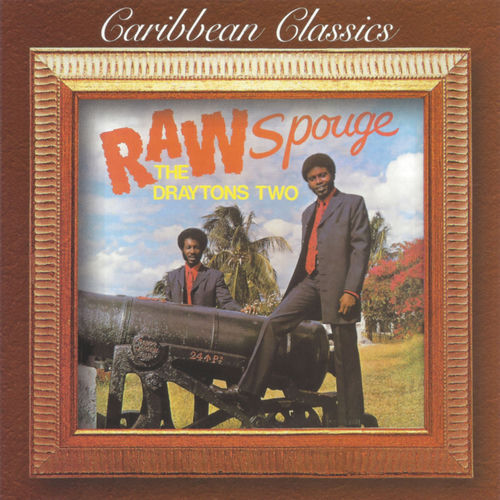
Spouge is one of the few indigenous forms of Barbadian popular music, yet more than fifty years after its emergence, many Barbadians still have little understanding of what it actually is.
Most people immediately credit Jackie Opel with inventing it, and fair enough, he is central to the story. Still, I would argue that spouge really emerged through a collaborative process between Opel and the Troubadours, the band he worked with after returning from Jamaica in the late 1960s. It was through that musical exchange in the rehearsal room and on stage that the foundations of the sound were laid.
Even then, spouge did not hit widespread popularity until after Opel’s death in 1970, when a wave of bands took his musical ideas and shaped them into a more standardized form. I refer to these groups as the spouge synthesizer bands, with Draytons Two (whose album Raw Spouge was particularly influential) leading the way.
So what actually makes spouge sound like spouge? Ask anyone on the street and they will point straight to the cowbell pattern. That cowbell is certainly iconic, no doubt about it, but it is not the whole story. Like most African diasporic musics, spouge is built on a wider web of interlocking rhythmic patterns. It is the specific way those parts sit together in the engine room that gives the genre its identity.

Spouge cowbell pattern.
For a few years in the early 1970s, spouge was huge across Barbados and parts of the English-speaking Caribbean, before declining sharply by the middle of the decade. Since then, it tends to resurface whenever conversations turn to Barbadian nationalism, cultural identity, or indigenous music, usually around government-sponsored cultural celebrations.
Yet it has never truly found its way back into the mainstream despite the efforts of genius musician Nicholas Brancker and others. Maybe the real question, then, is not simply what spouge is, but why a sound that once captured the imagination of Barbadian audiences has struggled to find a meaningful place in the musical lives of the generations that followed.
Essential Spouge Listening
- “You Got to Pay” – Jackie Opel and the Troubadours
- “Drink Milk” – Draytons Two
- “Have a Thing About You” – Wendy Alleyne and the Dynamics
- “Vehicle” – Richard Stoute and BRC
- “People Get Up” – Draytons Two
- “You Can Have It All” – Flatbush
- “Gimme Music” – The Dynamics
- “6 and 7 Books of Moses” – Draytons Two
- “Snow Cone” – Cassius Clay
- “I Am a Barbadian” – The Sandpebbles
Further Reading
Walcott, H. Stefan. Caribbean Musician’s Handbook. Buy it on Amazon.
—. A Song, Two Rhythms and Rihanna: Musical Sounds, Meaning and Power in Four Genre Worlds. 2014. University of the West Indies, Cave Hill, PhD dissertation.
Watson, Elizabeth F. Jackie Opel: Caribbean Musical Visionary. Edited by Marcia Burrowes and Mike Alleyne, Ian Randle Publishers.


Published by