

Christmas Music in the Caribbean in 5 Genres

Christmas is an important event in the Caribbean.

Here are five musical genres that are/were rooted/routed to this time of year.

1. Tuk – Barbados

Tuk music is a fife and drum music. It is perhaps the only indigenous Afro-Barbadian genre to have survived colonialisation. At Christmas, Tuk groups would come through villages playing and drinking rum. Tuk music is hardly ever played at this time anymore and has moved into the realm of nationalist celebration.


2. Masquerade – Guyana

Masquerade is another fife and drum music with a strong musical similarity to Tuk.  Like Tuk, the playing of it at Christmas has waned.

http://www.youtube.com/watch?v=-yOT0b53KaE


3. Plena – Puerto Rico

Plena is the one of the major indigenous Puerto Rican musical forms. The music is seen to have been created by English-speaking Caribbean migrants in the 1800s. It is also one of my personal favourites when it comes to Caribbean genres.


4. Parang – Trinidad and Tobago

Trinidad is one of the more cosmopolitan islands in the Caribbean. Parang shows the Hispanic cultural influence as it was traditionally sung in Spanish and uses instruments found in other folk cultures of the Hispanic Caribbean. There is a Soca-Parang variant that is popular but here it is in its traditional form.


5. Parranda – Venezuela

To end, here is a popular genre from Venezuela. Parranda sounds like a more rhythmically complicated version of parang and I am sure they come from the same root. Here is one of my favourite groups, Maracaibo 15.

http://www.youtube.com/watch?v=A4FjVA3MUvs


So I hope you have enjoyed this brief Christmas blog.

All that I am left to do is wish you a

Merry Christmas!

Please enjoy it wherever you are.

Caribbean Music Man


10 Things You Probably Did/n’t Know About Wuk/ing Up – Wuk Up and Wukking Up

To join in with the overt nationalism this time of year in Barbados, here is a blog feature on what I consider the national dance,

the Wuk-Up.

1. Wuk-Up is a dance from Barbados with roots in Africa.

Wuk-Up  is said to have come to Barbados via Sub-saharan African where isolation of the limbs and movement of the hips are part of the dance tradition. Here is a traditional one from Africa and then a Wuk-Up video.


2. Only Bajans are said to Wuk-Up.

In Trinidad they wine, Barbados however is the Wuk-Up capital of the world.  The difference comes from the hip movement, see if you can spot the difference between a wine and a wuk-up.


http://www.youtube.com/watch?v=YRt84z5jDXs


3. Wuk-Up has evolved.

Like all things of nature, Wuk-Up too is Darwinian and as the music has evolved, so too has the Wuk-Up.  I believe, and you are hearing it here first, that there are 3 distinct periods * of Wuk-Up. These changes remember correspond to musical change.

1. Pre-Independence

2. Post Independence 1966-1994

3. 1995-present


4. Contemporary Wuk-Up varies.

While there is a general post-90s style Wuk-Up, it does vary between sub-genres. Bajan Dub/dancehall requires a different wuk than fast soca. So in the former you find jucks, stabs, bend-overs etc. and while these exist in latter, the difference in tempo means Wuk-Up variations are found.


5. Wuk-\Up music is in duple time.

The Wuk-Up occurs in a duple-metre environment. No one Wuk-Ups to 3/4 waltzes, or 7/4 experimental Soca pieces. The hips sub-divide the main pulse, either in half (Bajan dub, Soca <120 beats per minute),  or in quarters (Bajan dub, Soca <120 beats per minute) or with the pulse (soca>135 b.p.m).


6.  Men and women Wuk-Up

Wuk-Up in Barbados is not gender specific. It was not always this way but in the mid 1990s the Grass-Skirt possee popularised male wuking up making it even more socially acceptable.


7. The Wuk-Up has 3 variants.

These are:

  • female on female
  • female on male – most common
  • solo

Male on male wuking up is hardly ever seen in public spaces. This is because Barbados continues to be conservative when it comes to public displays of male homosexuality.

8. People touch when wuking up

As said,  wuking up can be done in pairs between males and females.  When this happens the male is behind the female similar to perreo in Reggaeton. Like perreo, there is physical contact thus making the Wuk-up different to other sexualised dances such as rhumba, tambu, bomba etc. where touching does not occur.

Here is Tambu from Curacao where there is no touching.

http://www.youtube.com/watch?v=5KIdzUWZ5JU


See Example 4b for Wuk-Up.


9. The female dictates when the dance is over in the male-female Wuk-Up.

In Barbados a female decides when your Wuk-Up is over. She does not have to tell you this but her gradual moving away means it is done. This is not meant as a “pursue me” courtship practice a la kangaroos; when she leaves it is over.


10.  The average Wuk-Up is between 10-20 seconds.

Unless the couple wuking up is romantically involved, the average Wuk-Up bewteen strangers is 10-20s (per one Wuk-Up round). This research was done totally unscientifically of course but I stand by it. If you are a male be sure to pay attention to this as well as #9 and if you are a female it is better not to linger beyond this time. *

So those are 10 things to note on the Bajan dance. Thanks for dropping by and Happy Independence weekend if you are in Barbados.


* – Check out my Slideshare on Wuk-Up Music.

Also please note the soon to be released work of Cultural Studies dance scholar John Hunte on the dance.

* A number 11 could have been, the church does not like the dance.


In the Classroom with New Soca Writers

At the Barbados Community College I teach Caribbean music. In class, in keeping with my creative-centric approach, which like the Americans I have give a name, creativincism, I try to get the students to write in the styles taught. Given the fact that Soca has become confined to such a limited  range of compositional choices, I provide my students with the necessary ones and see what they come up with. Of course this stuff is graded, how else would they participate?  First up are two groups composing in the style of Destra circa early 2000s. I call this Power Soca (which of course puts me in contradiction with others but I grade the papers right?).

Here is another one. By the way, Lennox seen here is not a Soca/Calypso practitioner by any stretch of the imagination.


In my view, even though the audio and video are quite rough, they manage to at least provide you with a good understanding of the style the students are working with. The same could also be said of the next two videos which are written in the Bashment Soca style.


I have chosen the last two guys, Kevin and David, because they are as far removed from this music in terms of what they do regularly as any two musicians could be. However, given the guidelines and the space, they too managed to create something that is cool.

To end, I think that creativity lies in many humans. It just shows that once given the boundaries within style and a bit of space, what can be accomplished. It also shows that Soca can have new writers, just that the closed nature of the Caribbean media limit this.
Anyway, let me end with Lennox, “your Rum is my Rum, and my Rum…”

Roy Byer, so long!

Roy Byer was one of the THE people when it came to Bajan knowledge.

He passed away this month.

As Roy was a serious archivist, I have included the following video clips as tributes.

These clips will be housed on my “Words From the Masters” page as long as the internet lives.

Please enjoy, and remember him this way,

as a passionate and opinionated lover of Barbadian culture.

RIP


My Top 10 Caribbean Lyrics

I am poor with lyrics.

In fact, I am dismal with them.

However, a number of lyrics have stuck in my head and really meant something to me over the years.

Here then is my Top Ten lyrics list (of Caribbean music of course, the US has enough lists to last for generations)

Top 10 Lyrics

  1. Caught me on the loose fighting to be free, now you show me a noose under cotton tree, entertainment for you, martyrdom for me. – Third World
  2. Watch out my children, they got a fellah call Lucifer with a bag of white powder. He don’t want to powder yah face, but to bring shame and disgrace to the human race. – Ras Shorty I
  3. Tell them they can keep they money, I goin’ keep mine honey and die with my dignity. – Singing Sandra
  4. Emancipate yourself from mental slavery, none but ourselves can free our mind – Bob Marley.
  5. West Indian politician, I check out yah evil ploy, the more you sing, the more you sound like Westminster choir boy. – Mighty Gabby
  6. Get up in the morning slaving for bread sir, so that every mouth can be fed. – Desmond Dekker
  7. The country sick, the country ain’t well, see it as a person and then you will tell. – Red Plastic Bag
  8. So let we live our whole lives, forIvah and Ivah. – Isasha
  9. I am the seed of me father, he is the seed of my grandfather. – Jahaji Bhai
  10. Black woman and child, for you I have so much love. – Sizzla

What are some of yours?

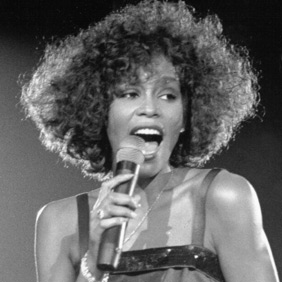
What is so great about Whitney Houston?

Whitney Houston

February, 2012, saw the passing of Whitney Houston and along with the outpouring of sadness especially here in the Caribbean, there were numerous TV segments describing how great she was.

But how was Whitney Houston great?

This may seem like a pointless question, as you must be screaming because she could sing, but yeah she was great because she could sing, like REALLY sing.

Whitney’s greatness differs from other artists coming from the United States because unlike let us say a John Lennon or John Coltrane, Whitney Houston was not the pioneer of any musical genre, did not play an instrument (to performance standard that I have seen) and did not write any of her songs.  So what is it then?

Whitney was a stylist, a REALLY REALLY good stylist.  A friend of mine once said that artists can be either great innovators and/or great stylists. Innovators are easy to identify because they start stuff; stylists on the other hand are more difficult to work out.   In short, innovators are those that open the doors to new sounds, while stylists decorate the inside their own way; so while Whitney did not create R&B pop, NO ONE sounded like her singing it.

Whitney’s style is based on traditional African American gospel singing.  Her greatness lies in the way she makes musical choices within this style. So Shakespeare used English, which he did not come up with (I don’t think), but it was how he used English that made him great. Whitney did not come up with gospel singing, but to me she made some GREAT stylistic choices using the musical vocabulary.

The key element to Afro-American gospel singing is vocal improvisation; what the layman refers to as runs/riffs. An important part of this approach is that the melody is hardly done the same way twice. Of course the changes made between melodies are not random and are based on stock phrases. It is the performer’s use of these phrases that determine their mettle, along with, of course, singing in key. Check out a great example below by Dr H. Beecher Hicks Jr. of the Metropolitan Baptist Church.

Now here is Whitney singing the US anthem. 

One of Whitney’s other performances that show me her stylistic greatness, and this may come as a surprising choice, is her rendition of “Do You Hear What I Hear.”  I have chosen this because it displays Whitney’s complete command of the gospel tradition as she makes some highly creative changes to the melody, especially if we consider the original. To understand what I am saying, listen to the two versions below. The first is done by Bing Crosby and the second by Whitney.

http://www.youtube.com/watch?v=SxO3MvfkKp4

http://www.youtube.com/watch?v=svo17Dgs3PM

Wow what a vocal performance!

Some may argue that others did this as well, others may even argue that some did it better, but hardly anyone would say Whitney did it badly!

To end, thanks for living Whitney and thanks for showing the world what stylistic GREATNESS really is.

For further discussion, leave a comment!

Top 10 Books on Caribbean Music for (Academic) Dummies

Firstly, let me say that I, of course, would recommend my book, Caribbean Composers’ Handbook on Amazon.com for all of those interested in the actual music of Caribbean music but outside of that, here are some others. 🙂

1. Cooper, Carolyn.  Noises in the Blood: Orality, Gender, and the “vulgar” Body of Jamaican Popular Culture. Durham: Duke University Press, 1995.

Carolyn Cooper is one of the premier academics on Dancehall culture in Jamaica. This book is seminal in how it seeks to re-examine the common perspectives on Dancehall. Even though she is an academic, the book is generally accessible and Cooper’s points are still valid some near 20 years later.

2.  Bradley, Lloyd.  Bass culture: when reggae was king. London, Viking 2000.

Bradley’s Bass Culture is one of the best overviews on Jamaican Reggae music I have ever read.  Bradley takes the reader from the pre-sound system of the nineteen forties to the emergence of Dancehall. All the major figures are there from the three big sound system operators of the 60s to the early Dancehall pioneers like Yellowman.

3.  Cowley, John. Carnival, Canboulay, and calypso: traditions in the making. Cambridge [England]; New York, NY, Cambridge University Press, 1996.

Cowley presents a well-researched book on carnival. Cowley provides a great volume of historical information on early Carnival. He also gives many 2nd hand references on important events, such as the Carnival riots and early Calypso competitions. A good one for those who have to teach calypso history.

4.  Pérez Fernández, Rolando. A. La binarización de los ritmos ternarios africanos en América Latina. Ciudad de La Habana, Cuba, Casa de las Américas, 1987.

Pérez Fernández’s book is in Spanish. However, this should not put off persons who do not speak the language. Pérez Fernández ideas are fascinating and unlike many other academics, he deals with the musical sounds of Caribbean music. His main idea is that there was a process which changed African music into the folk music of the Americas we know today. The influence of this work is obvious as he is frequently quoted.

5. Guilbault, J. Zouk: world music in the West Indies, Chicago, University of Chicago Press, 1993. 

There are few texts on Zouk in English, Guilbault’s book is one of them. Guilbault details the origins of this music as well as the identity implications it creates as a French Antillean identity emerges through Zouk. Guilbault also interviews the important players within the movement and provides transcriptions. Another plus is the inclusion of a CD which is also fantastic when dealing with music as a subject.

6.  Kenneth M. Bilby and Michael D. Largey. Caribbean currents: Caribbean music from rumba to reggae. Philadelphia, Temple University Press, 1995.

This book seeks to be an overview of Caribbean music in general. It does a decent job within the introduction of describing the conditions which led to the creation of many genres. It also seeks to detail the important regions within the Caribbean giving summaries and identifying important figures. This book is a good entry into the multi-faceted world of Caribbean music.

7.  Rivera, Raquel Z, Wayne Marshall, and Deborah Hernandez Pacini. Reggaeton. Durham: Duke University Press, 2009.

Reggaeton is possibly the youngest popular genre to have a book about it in the Caribbean region. This book is excellent and through the different perspectives of the contributors, we get a wide view on Reggaeton from its sexual to musical implications. If you want to know anything about the genre, seek out this text.

8.  Lesser, Beth.  Rub a dub Style: The Roots of Modern Dancehall, 2012.

This book is the only one that is available online free of cost as a pdf download. Beth Lesser said she did this to avoid the usual accusations leveled at outsiders who write about other cultures. Lesser’s book is good though and she details all the important figures in the genre; from U-Roy to Beanie Man. Pick it up!

9. Rohlehr, Gordon. Calypso and society in pre-independence Trinidad. Port of Spain 1990. 

Rohlehr, like Cooper, was an academic from the University of the West Indies.  Rohlehr is a literary scholar and in this book, he provides thorough analysis and documentation of the literary form of the Calypso. Rohlehr also details important historical events and how they impacted on the Calypso. It is a formidable text in terms of length so be prepared for the long haul.

10.  Mauleon, Rebeca. Salsa Guidebook: for piano and ensemble. S.I. Sher Music 1993.

This is another book which deals with the sounds of the music. Mauleon is fantastic at providing the necessary listening for the genres she is looking at. She also provides direct transcriptions from these songs. As it deals with Salsa, Mauleon also transcribes from the lesser-known Puerto Rican genres of Bomba and Plena.

So there it is. Remember it is only “a” list and there are other fantastic books out there. Leave a comment for other books you would recommend.

Top 10 Caribbean Music Documentaries

StefanWalcott-LogoRedesign-vertical-grayscale


1. Marley

http://www.youtube.com/watch?v=KuIkYtYi4b0

There are several Bob Marley documentaries out there. This one is the newest and unlike the others, seeks to present Marley as a complex character. However, I still recommend watching “Caribbean Nights,” which is one of the oldest, to get even more perspective on this Caribbean musical giant. However, you can’t go wrong with this one.

2. Sons of Benkos

http://www.youtube.com/watch?v=A1nXiXuuwqE

I see the Caribbean as a cultural area and this documentary focusses on a music type, Champeta, that is not from the archipelago. Instead this popular music form is from Colombia and is a fascinating fusion of popular Western and Central African music and Colombian music. Although Champeta has changed, this documentary shows its roots as well as a fascinating examination of the Palenque region, which is seen as the heart of African culture in Colombia.

3. Made In Jamaica

Made In Jamaica is one of my favourite documentaries on Jamaican music. It does not only have the talking heads as in most documentaries but live performances as well. Each performer is backed by one of the premier rhythm sections in the genre, Sly and Robbie and the sound is fabulous. If you are one that likes more than just info and bios, this documentary is definitely one for you.

4. Routes to Rhythm

http://www.youtube.com/watch?v=RAhSV6_Da84

5. This PBS documentary from the 80s is one of the BEST on salsa.  Everyone is in here. Like Made in Jamaica, some killer live performances are also present. Watch all of it if you have any interest in Salsa music and Cuban music in particular, REQUIRED VIEWING!

5. La Musique Antillaise

This Banyan documentary looks at French Antillean music. Zouk is here as well as older traditional forms.  A short and good watch and for non-French speakers like myself, it is in English.

6. Soca Power

http://www.youtube.com/watch?v=LhNJb7DCh0o

Soca Power is good, it could have been better, but it is good. The documentary follows monster soca artists Bunji Garlin, his spouse Fay-Ann, and Machel Montano at Carnival. While not being fly-on-the-wall, it still manages to capture some of the excitement behind Carnival performances. Worth a watch.

7.  Reggae inna Babylon

http://www.youtube.com/watch?v=NaIIXVoj6zw

Reggae inna Babylon examines the music in the Caribbean diaspora as it focusses on the work of reggae artists in the nineteen seventies in the United Kingdom. The usual suspects Aswad and Third World are here, and though the documentary itself is not quite riveting, we get to see them in action at the time of their greatest popularity – for that alone it is worth a watch.

8.  Puerto Rican Bomba : A Search For Our Roots

This documentary, like Reggae inna Babylon, is partially based in the Diaspora, but then again so much of Puerto Rican culture straddles that divide between mainland and diaspora. It makes the Bomba, a traditional folk form its basis and for those interested in the sound of it, we get break downs of the indivudal parts. It is detailed and very enlightening.

9.   Straight Outta Puerto Rico: Reggaeton’s Rough Road to Glory

If you want an overview of Reggaeton, this is a good place to start. Despite the gawdy ads that seem to suggest a much less mentally stimulating offereing, this documentary manages to speak to the movers and shakers and highlight the events which were important to this genre as it emerged.  With plenty of loud music and imagery, this one would keep you watching for sure.

10. Calypso Dreams

http://www.youtube.com/watch?v=s2I0ZnjpAy0


Calypso Dreams is one of my favourites on this list. It has singing heads as opposed to talking heads, and manages to find many of the calypso artists in their natural environment. Due to this, we hear them without the trappings of arrangements and stage mics. They instead have guitar accompaniment most of the time. If that wasn’t enough, a history of calypso is also given. Every one is here, even Roaring Lion – this is a must see for anyone interested in Trinidadian calypso.

Vybz Kartel: Musical Genius! Dancehall Mi Seh I

Vybz Kartel happens to be one of my favourite Caribbean artists of vybz Kartel

all time.

Some might be shocked by this, but by growing up with the pounding modality of Dancehall, I was brainwashed into appreciating rhythm and a good hook.

What really gets me about Vybz is his creativity.

One must remember that Dancehall artists do not have the same musical vocabulary to rely on as other composers and improvisers in other types of genres. So one does not learn “Dancehall licks,” as in Jazz, where improvisers learn phrases they KNOW will work.

Dancehall is naked (pun intended). A dancehall performer has a ‘riddim’ (a beat with some chords at times) and they create entire songs using just that. The imagination and skills required to do this are therefore quite different than in other types of music (Rap of course being the exception). Some performers are rather good at creating songs from beats, others not so much. Vybz is a BOSS. Here is one of my favourites, “Realest Thing,” which testifies to this.

Of course that is not all; check this, one of his more famous works, “Clarks.”

http://www.youtube.com/watch?v=ORi4xwSwWlM

What I like about Vybz is his:

  • ability to create sections, where melody as well as rhythmic attacks change.
  • thorough understanding of time and rhythm.
  • talent at placing an accent.
  • melodic variations  in order to achieve sections. He does this so the riddim doesn’t get boring.

To end, it is obvious I am using mostly rhythmic criteria to judge Vybz. I feel fully justified in doing this because rhythm is one of the main things Dancehall is about. So it makes no sense judging Vybz Kartel by how many high notes he can sing or how many chords are in his songs.

It is all about the rhythm and Vybz is the drumming master!

* Yes, I just musically analysed Vybz.

** Yes, I did an article on Vybz unrelated to his murder conviction.

Crop Over Blog IX – Summary of the Festival 2014 by guest Blogger Trevor Wood

This post was created by Trevor Wood, a music aficionado and lover of Bajan music. He is an avid fan of Crop Over and provides the best summary of the festival 2014 I have read. Enjoy!


It’s official, the dust from Crop Over 2014 has settled and dub has re-taken the airwaves. I always detest the first week after Kadooment where you need to adjust from soca on the radio going from a flood to a trickle. I really enjoyed myself this year and I’ve heard many others make positive statements about the season. It would be interesting to hear a repeat visitor’s perspective. In any case, here’s mine:

 The Good

  • A mubba-ton of high-quality sweet soca. Again.
  • Younger artistes beginning to establish themselves; not as one-offs but as consistent performers. Gorg, Imani, Leadpipe & Saddis, Ian Webster, Sanctuary – I’m talking about you.
  • Having gone to a few tents on their judging nights and the Pic-O-De-Crop semis (which was burs’!) I was impressed by the social commentary. I think the competition was very keenly contested and the spat that between Headliners and All-Stars emphasised the importance of the tents in our calypso. I realised for the first time that the tents have their own cultures, followings and communities. Maybe that’s something we can emphasize more.

The Bad

  • Bashment soca aside, our up-tempo calypso is struggling badly. I am not sure what more can be done to stimulate it. Maybe a better question is whether or not it will be missed if it continues to disappear. After all, calypso wasn’t always 160+ bpm.
  • Too much music from Trinidad Carnival is being played at Crop Over events. I was at an event where Maximus Dan was played more than Mikey. In my opinion Carnival music has an advantage as people are already familiar with it by the time Crop Over music comes out. I can understand why DJ’s use it since people respond to it because it’s seasoned in. This year in particular was a very good year for groovy music at Carnival, which is right in Bajans’ sweet spot. However, I think the DJ’s can and must do more to keep Crop Over music at the forefront.
  • No music from any other island is being played at Crop Over events. I think there is room for it without suffocating our music.

Best Performance


Sanctuary performing Mega Monday at Soca Royale. I have been a Sanctuary fan for years. I love his voice and lyrics but I felt that his stage craft needed work. I must also say that I always liked ‘Mega Monday’ but up to that point not love ‘Mega Monday’. So when Sanctuary was scheduled to

take the stage last, and immediately after RPB, one of the crowd favourites, I was hopeful that he would be competitive but honestly not expectant.

Ironically, his performance made the song for me instead of the other way around. From the first note, I knew that something special was about to happen. Every second of Sanctuary’s performance captivated me. The choreography, the props, his energy, and yes, even his hair accentuated the song’s theme brilliantly. I don’t know the extent to which the arrangement of the song was changed for that performance, but it was as though I was hearing it for the first time and discovering sweeter and sweeter bits of it as the song progressed. It was a breath-taking spectacle.


Well done Sanctuary!


Worst Experience


Being at a fete on the cusp of Crop Over weekend to being subjected to an extended dub session. The DJ indicated that the promoters gave

him permission so they were co-conspirators. I was on my way to the door when the madness ended. Two songs more and I would have made it outside. I may not return next year.


Best Experience


Dave Smooth’s and Dooley Unruly’s set at Scrawl-Up Illuminate. It was a breath of fresh air to hear predominantly Bajan music, past and present, being selected expertly and played at full-hype. The patrons lapped it up. I want more of this from local DJ’s.


Favourite Social Commentary


Don’t Know How To Win – Blood. This song was clever, funny, impactful and dealt with a wide cross-section of issues. It was written specifically for Blood and it fit him like a glove. Bravo.


Favourite Party Song


Ah Feeling – Leadpipe and Saddis. From the first time I heard it I knew this song was going to dominate at Crop Over. The thing is the embodiment of sweetness. I heard that it was submitted for the sweet soca competition and did not make the semis. I refuse to believe this.


10 songs that should have played more (in no particular order)


    1. Show Them Your Beauty – Basil
    2. This Is Why – RPB
    3. God Is a Bajan – Smokey Burke (Brilliant, irreverent stuff!)
    4. Next To The Rope (Pan Remix) – Mikey (Sweetest music of any song this Crop Over. I am not a pan fan but I found this version mesmerising.)
    5. Ah Too Love To Party– Verseewild (Verseewild the versatile. Who knew)
    6. Encounter – Sherwin Straker
    7. How Ah Like It – Edwin
    8. Rumpage – Philip 7 (This song makes me want to whistle. It reminds me of Day-O for some reason.)
    9. So Good – Hypasounds
    10. Doing Me – iWeb (The new RPB?)

I’m looking forward to a bigger and better 2015. I expect that the same cadre of artistes will represent well and others like Lorenzo and Big Red will continue the good work and really enter the spotlight.