
JOHN BOULAY – CHARLOTVILLE OR MARTIN’S BAY?

This folk song, John Boulay, is one of the more popular folk songs in Barbados.

I learnt it not from my parents or grandparents, but at primary school from my music teacher, Mr Messiah, and the Bible of folk songs from Barbados, The Folk Songs of Barbados by Marshall, McGeary and Thompson.

However, when I searched for a version of the song I did with the female group, The Tenantry. I came across this. John Boulay, sung by Errol James with the Marionette Chorale. Here it is below:

In the description, it is called a Tobago folk song.

I am really not surprised by this, as songs, even in those days without modern mass media, travelled easily. The journey was made even easier, no doubt by the closeness of Barbados and Tobago. What is interesting, though, is that John Boulay, who is from Martin’s Bay in Barbados, is now from Charlotteville. However, his poor character remains the same.

Shame on you, John!

In short, this song shows me how terribly under-researched English-speaking Caribbean folk songs are, and that the Caribbean as an idea extends beyond small national borders, even if it takes the scoundrel John Boulay to show us.
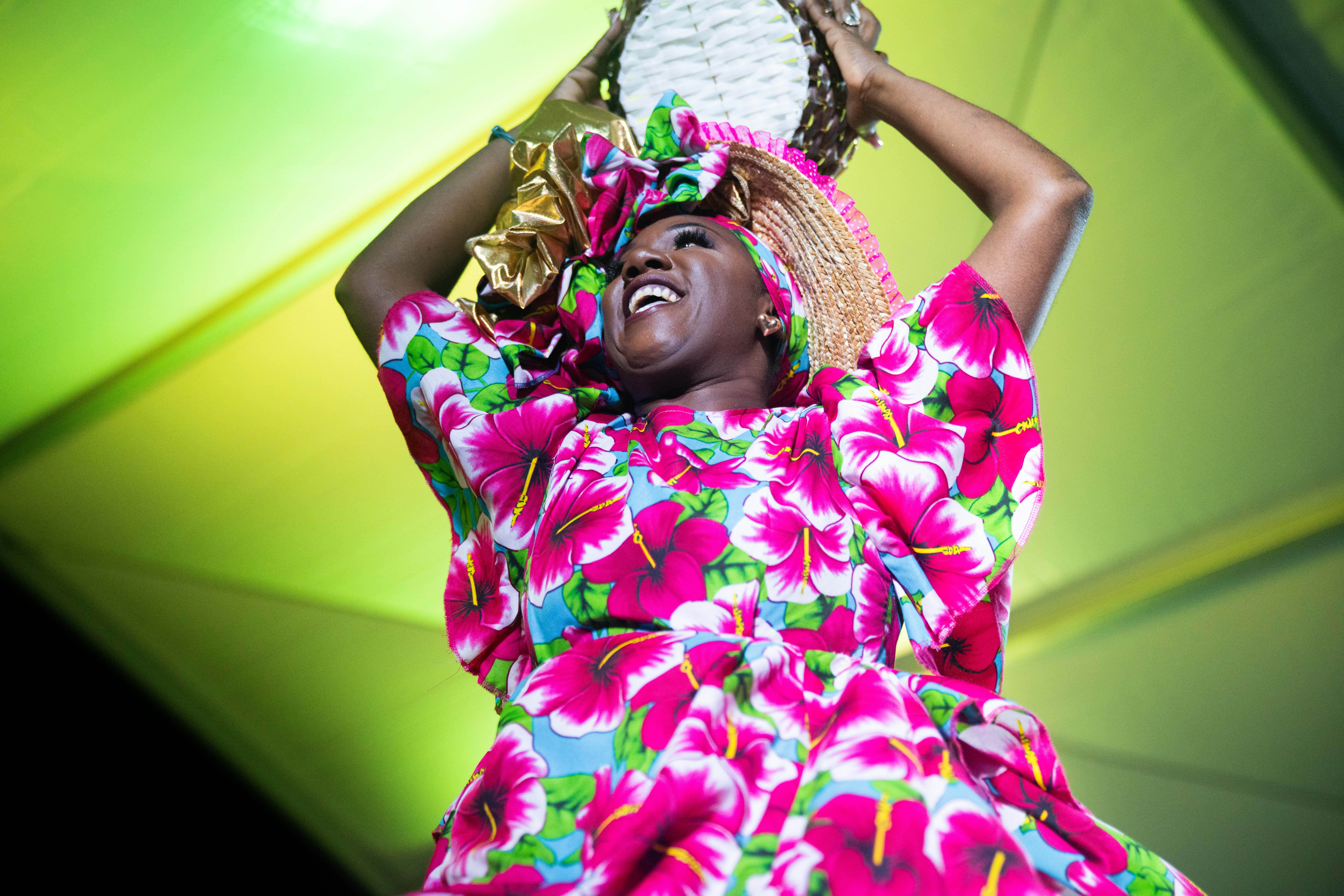
Crop Over – The Periods – Period II – The Blue Ice Years – 1983-1990

Welcome back to my series of Crop Over musical periods. The last period, Ancient Crop Over Music, looked at the music that was part of the festival after its re-introduction in 1974. This next stage is one of the most important ones in the Barbadian music period, and for many, it is seen as the Golden Age.

The Blue Ice Years

The Blue Ice Years is the period where Eddy Grant, from his Blue Wave Studio in St. Philip and Ice Records, his label, dominated Crop Over. He was responsible for the songs that bossed the Tune of the Crop, which are the songs most frequently played at Kadooment, which is the final day of Crop Over.

Boots – The Mighty Gabby

This 1983 release from the Mighty Gabby was massive, not only in Barbados for Crop Over but throughout the region. In fact, it did the unthinkable for a Barbadian release then and became very popular in Trinidad. Boots is also typical of the Grant production approach of that time, with back-beat drums, minimal use of horns, and comparatively sparse bass lines. This song did not win the Tune of the Crop for that year, but it remains one of the classic Crop Over songs of all time. 

Sousy – Director


Produced by Eddy Grant and arranged by trumpeter Ricky Brathwaite, this song was one very popular in 1985. The rhythms were more typical of other soca offerings in the Caribbean at the time, and it didn’t have the Grant production stamp of the period, however, the durability (it was remade this year by Barry Chandler) and the impact of this work can not be denied.

Mr. T, Stinging Bees, More Grynner- Grynner

When it comes to popular works from the Blue-Ice Period, Grynner’s songs are definitely the ones to be noted. Grynner was the undisputed Tune of the Crop artist of the 80s, and these three songs won from 1983 to 1985. All of them bore the Eddy Grant style, with the back-beat rhythms from American music and/or the bass and harmonic minimalism.

Summary

For me, the Blue-Ice Period is the most nostalgic era of Crop Over for older Barbadians. It was not only defined by these iconic sounds and songs, but also marked a significant shift in the festival’s status. This was a time when the tent system was thriving, and Crop Over transitioned from the fringes to being a truly national festival.

60 Caribbean Folk songs available on amazon now

I present to you my final book from the lockdown period.


60 Caribbean Folk Songs with Audio.


60 Caribbean Folk songs is a book which has compiled folk songs from Trinidad and Tobago, Dominica, Jamaica, Guyana and Barbados. For the first time, all these Caribbean treasures can be found in one document that is digitally preserved.

All songs come with audio tracks so you can sing along.


Check the link below.

Enjoy

XX Bajan Folk Songs with Audio

Heah,

Take a look at my latest project:

XX Bajan Folk Songs with Audio.

Available now on amazon.com.

XX Bajan Folk Songs is a compilation of twenty Bajan folk songs from the now out-of-print Folk Songs of Barbados book.  The book also comes with audio as the name suggests so you can sing along.

Check it out!


3 reasons why if I were Nikita I would go into terminal depression.

Crop Over has seen its first controversy for 2017.

For those not in Barbados, it concerns the release of Nikita’s song, “Same Way,” which basically was released 2 years before by DeeVine and called “We De Same.”

Check the links below:


For any artist involved in the Carnival music industry this mix-up is pretty much as life-shattering as they come and here are 3 reasons why I would be in terminal depression if what had happened to Nikita had happened to me.

  1. I spent plenty money!

To get any song out for Crop Over is expensive. There is the song-writer, the producer, the studio time, the mixing and the mastering to pay for.  Those bills could run north of 5000 BDS easily. So to shell out all of that cash to realize my song is not the original work I intended would have put me in firm connection with the Kleenex box.

2.  I look like a thief

Stealing is reprehensible no matter how and when it happens. It is even worse when it looks like a public heist of lesser known artist. If I was made to look like a hustler at best, or a thief at worse, when I am not even close to being dishonest, then I would be completely broken.

3.  I have one shot at this.

The carnival music complex is a CRUEL model. It allows for no mistakes. So to have a single which is going to be my only major release for the YEAR caught up in plagiarism is possibly the worse thing that can happen. It can also rule me out of the lucrative lottery of the soca competitions.

PAIN!!!!

To end,

Are there other issues in the Caribbean? Yes, they are.

But do not overlook for one minute the personal and professional predicament Nikita and the other members of the production team have been placed in.  This is a serious matter of integrity that is being played out VERY PUBLICLY. So after reading this, do like me and place yourself in her position and if you come out positive, then you are as good as Nikita, Deevine and the Red Boyz.

But if you think you would be equally depressed…

You are not alone

I would feel DE SAME WAY!


More Short and Sweet Commentary from Roy Byer

Roy Byer was a cultural activist and archivist who passed away in 2014.

He was also one of the best commentators on Caribbean and Bajan culture I have ever come across. I have posted this short clip today because it goes some way to explain two social events happening currently in Barbados. These are:

1. The xenophobic public reaction to 90 Nigerian students studying here

2. The alleged/or not so alleged desires of a headmistress to patrol black natural hair

Here Roy is speaking about music but he is really addressing how black cultural practices have historically been viewed in Barbados.

This post might appear quite local but race and identity politics are Caribbean wide issues.

Over to you Roy!


* Banja was a term used by early 19th and 20th century Barbadians to denote rhythmic, black working class music.


Christmas Music in the Caribbean in 5 Genres

Christmas is an important event in the Caribbean.

Here are five musical genres that are/were rooted/routed to this time of year.

1. Tuk – Barbados

Tuk music is a fife and drum music. It is perhaps the only indigenous Afro-Barbadian genre to have survived colonialisation. At Christmas, Tuk groups would come through villages playing and drinking rum. Tuk music is hardly ever played at this time anymore and has moved into the realm of nationalist celebration.


2. Masquerade – Guyana

Masquerade is another fife and drum music with a strong musical similarity to Tuk.  Like Tuk, the playing of it at Christmas has waned.

http://www.youtube.com/watch?v=-yOT0b53KaE


3. Plena – Puerto Rico

Plena is the one of the major indigenous Puerto Rican musical forms. The music is seen to have been created by English-speaking Caribbean migrants in the 1800s. It is also one of my personal favourites when it comes to Caribbean genres.


4. Parang – Trinidad and Tobago

Trinidad is one of the more cosmopolitan islands in the Caribbean. Parang shows the Hispanic cultural influence as it was traditionally sung in Spanish and uses instruments found in other folk cultures of the Hispanic Caribbean. There is a Soca-Parang variant that is popular but here it is in its traditional form.


5. Parranda – Venezuela

To end, here is a popular genre from Venezuela. Parranda sounds like a more rhythmically complicated version of parang and I am sure they come from the same root. Here is one of my favourite groups, Maracaibo 15.

http://www.youtube.com/watch?v=A4FjVA3MUvs


So I hope you have enjoyed this brief Christmas blog.

All that I am left to do is wish you a

Merry Christmas!

Please enjoy it wherever you are.

Caribbean Music Man