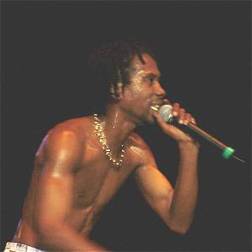

Looking Back at Bajan Party Past

Frequently in popular culture yesterday becomes the forgotten man.

Here is a video clip from Bajan pop culture past as calypsonian and I guess Soca singer, Bumba, destroys the party.

Seeing this now it is hard to imagine that guys actually played Soca without Mac Book pros and drum machines

but THEY SURE DID

It is also hard to imagine a Soca song such as this causing such HYPE

but IT SURE DID….

Congaline 94!

A throwback if there ever was one!

#RIPpartyinglikethis.

Just so Bajan Dub become Bashment Soca???!!!!!

Crop Over, Barbados’ major festival, has not been a place of musical surprises for some time now.

However, 2016 has produced a big one for me in the complete re-definition of the Bashment Soca genre.

In a previous blog post, I identified the common use of the term in Barbadian music circles and gave musical examples for the uninitiated. For those who missed it the link is below.

https://stefanwalcott.com/2014/05/23/what-is-bashment-soca-crop-over-blog-1/

Here also is soca artist Gorg speaking on Bashment Soca back in 2011.

The conversation is about the song below.


From the interview, we can hear Gorg reference Bashment throughout as this was the common term used to talk about the variant of Soca heard above.

However, this is not so anymore.

This year, a Bashment Soca competition has started which has music not sounding like the above, but as below.


And below


The examples above I considered to be Bajan Dub, a genre that I posted about with a Top 10.

https://stefanwalcott.com/2014/02/05/top-10-bajan-dub-dancehall-records-for-beginners/

Bajan Dub  has its routes/roots planted in the early 80s and had a resurgence post 2010. But this year it seems that is ALL now BASHMENT SOCA!

What the Bashment Soca/Bajan Dub has shown therefore is that genre is a very FLUID thing. Despite what many think, one cannot proclaim a genre and expect it to stay the same. It also shows that the creation of a genre comes from different places including sponsors!!! So despite what I say here, the fact that a lucrative competition has come about means that those that said Bajan Dub before will definitely be singing Bashment Soca now.

So to answer the title:

Question: Just so Bajan Dub become Bashment Soca???!!!!

Answer: YES!!!!???!!!!!

Genre is more than Rhythm even in a Rhythm Genre

Due to the fact there is so little literature on Caribbean music (I have contributed however with my book, Caribbean Composers’ Handbook, shameless plug) and it is not taught with the biblical authority as with some other subjects within our school system, there is always debate as to what makes up a Caribbean genre.

This post cannot detail how genre works in the ENTIRE Caribbean, that would be 3 books and a thesis, however, what it can do, and is going to do, is show that a song does not belong to a Caribbean genre because of its music alone.*   To prove this, here is a YouTube collection of some songs, which while having certain “Caribbean” rhythms, are certainly not seen to be part of any Caribbean genre.

Exhibit one,  Artic Monkeys, “Do Me A Favour”

From a brief first listen, one could hear the distinct rhythmic pattern pictured below (taken from my book Caribbean Composers’ Handbook).  This pattern is of course common within the Classic Soca Sound. However, I don’t, and not many others would consider “Do Me a Favour” a Soca song.

soca drums

The same can also be said of the next song by Heather Myles which I don’t think was released for any Carnival.

Then of course there is the South Mediterranean and North African traditions, which use the main Classic Soca sound drum beat. Take a listen to traditional ballos from Greece.

http://www.youtube.com/watch?v=g9YuaP7-gts


Here also is Sam Bass from the Alan Lomax Collection doing a song that is certainly not from Trenchtown, although it has a reggae strum.

 It is clear from these examples that music is not the only thing which defines a genre. So whenever you hear someone saying, “Listen to this, you heard this record of an American playing reggae?” remember that it is not only the music that makes a song fall into a genre but a whole bunch of other stuff too.

* check Fabian Holt’s, “Genre in Popular Music” or any discussion on this subject by David Brackett for greater understanding (Questions of genre in Black Popular Music).

My Track for Trinidad Carnival 2015

EDM (Electronic Dance Music) is huge in Soca for Trinidad Carnival 2015!

This is not a surprise as Soca has ALWAYS followed the trends in American Pop music! The influence this time around is reflected in the texture of the works (synth sounds, drum sounds, dropouts, build ups etc.).

My song for the season which follows this EDM trend is the Kes track, “General Don,”  which tries to squeeze in house, and a little dubstep as well. This song is also considerably faster than the other Carnival songs which use the EDM fusion. Check it out below.

Although not a big hit, this piece sums up where we are now in Soca and it just cranks action!

So if you are in Trinidad and the other Carnival spaces, enjoy!

If not, remember…

“Carnival is very critical.”


In the Classroom with New Soca Writers

At the Barbados Community College I teach Caribbean music. In class, in keeping with my creative-centric approach, which like the Americans I have give a name, creativincism, I try to get the students to write in the styles taught. Given the fact that Soca has become confined to such a limited  range of compositional choices, I provide my students with the necessary ones and see what they come up with. Of course this stuff is graded, how else would they participate?  First up are two groups composing in the style of Destra circa early 2000s. I call this Power Soca (which of course puts me in contradiction with others but I grade the papers right?).

Here is another one. By the way, Lennox seen here is not a Soca/Calypso practitioner by any stretch of the imagination.


In my view, even though the audio and video are quite rough, they manage to at least provide you with a good understanding of the style the students are working with. The same could also be said of the next two videos which are written in the Bashment Soca style.


I have chosen the last two guys, Kevin and David, because they are as far removed from this music in terms of what they do regularly as any two musicians could be. However, given the guidelines and the space, they too managed to create something that is cool.

To end, I think that creativity lies in many humans. It just shows that once given the boundaries within style and a bit of space, what can be accomplished. It also shows that Soca can have new writers, just that the closed nature of the Caribbean media limit this.
Anyway, let me end with Lennox, “your Rum is my Rum, and my Rum…”

Being Featured: A Really Cool Web Show for Caribbean Culture

The best thing about being an educator is seeing your former students grow.

One of them, Randy ‘Joe’ Moore, has gone into media and is currently producing a web series on Barbadian and Caribbean artists.

I asked Randy to answer a few questions on what the series is about. His extract is below along with a clip featuring the Bajan duo Porgie and Murdah a.k.a. Lead Pipe and Saddis from the show. Enjoy!


Being Featured started in January  2014 by Randy Moore (Host) after many years of constantly watching and being blown away by many of the talk shows on the international scene. After

completing a course in mass communication at the Barbados community College, an interest also grew in videography/photography and Randy decided to put the knowledge and resources

together and start an interview series called “Being Featured”.  This series is here to further highlight talented individuals in their respected field (fashion,

 music , film ,sports etc) and also an alternative medium to get talent out to the world. The program seeks to ascertain from the guest, information pertaining to how they got into their

field and any information fitting to influence a young person who would be interested in that area. The show has featured many well known persons which includes; Rhaj Paul ( fashion) ,

Biggie Irie ( reggae and soca artiste) , Sherwin Gardener( Gospel singer). In the future, viewers can expect to see and hear from those people who influence each and

every one of us and hopefully it will be an inspiration for some person to start to work at living their dream.


What is Bashment Soca? Crop Over Blog 1

lil rick

For those of you that have never heard of Bashment Soca, it is one of the most divisive forms of Soca coming out of Barbados, and thus Crop Over; people either hate it or love it, or in some cases hate themselves because they love it.

Bashment Soca, like many other types of Soca, does not have a clearly defined date of creation, because as I have argued, a genre only happens when others start imitating the prototype recording.

In this case, the prototype recording was “Hard Wine” done in 1996 by Lil’ Rick, who at the time was known primarily as a Bajan Dancehall performer and DJ*.

From this recording a number of traits become clear:

  • Rick’s prominent use of Bajan dialect.
  • The lack of harmony.

As this prototype was copied due to its overwhelming popularity, artists too copied the subject matter (wukking up) and added another one of their pressing issues, drinks.  Here is Fraud Squad:

We can once again see the strong use of Bajan dialect and the generally “odd” harmony.  Here is another classic Bashment Soca hit, “Boom Tick Tick.”  It sings about dancing, wukking up, which Hard Wine did and it is also mixed very raw in comparison with other professionally produced songs.

In summary, most of these Bashment Soca songs are from the early 2000s and it is my view that it is a sub-genre that is quickly disappearing as Bashment Soca artists get more “musical” (see Gorg ). However, for better or worse, it remains one of the clear sub-genres of Soca to come out of Barbados. **

* The input of Eric Lewis and his work with MADD was also important. Lewis employed heavy use of Bajan dialect throughout his compositions see “Tribute to Grynner.”

* * See my Stabby post to come for another example of Bashment Soca in action!!!

Why Can’t White People Dance? (To Caribbean Music)

We have all been there as Caribbean people. We are in a club and our favourite Soca/Dancehall/Zouk/Calypso/Konpa/Merengue/Timba jam comes on. As we pull our partners or absolute strangers close, or in the case with Tambú, at a respectable distance, we glimpse out of the corner of our eye some obvious non-natives moving. Are they dancing? You ask. They must be since they are not foaming at the mouth.  For those unfamiliar with this scenario watch the following clip.

Also for those unfamiliar, here are Caribbean people dancing to Soca.

And finally, for those unfamiliar to the general issue, here is Eddie Murphy from his legendary “Raw” stand up commenting on it.

Unlike Murphy and Chapelle, who also does a seriously funny take on this, I will attempt to apply some sort of meaningful analysis to answer the question why can’t white people dance to Caribbean (black music) music?

The (an) Answer

Dancing and responses to dancing show more than anything how much of a learnt behaviour listening is. For example it is obvious that in both the examples above, both sets of individuals were responding to the sounds they were hearing. However, it is apparent that

  1. They were not responding the same way to the sounds they were hearing.
  2. They were not choosing the same sounds to respond to.

From the clip, Murphy suggests that “white people” listen to the lyrics and dance off of those. I however, think that is more than that. Let us look for example at a song that is tremendously popular “Monster Winer” by Kerwin Dubois and Lil Rick. I have used this example for a reason which shall be revealed in a bit.

From the song, there are four distinct rhythms that are played together:

  1. The rhythm of the melody as sung by Kerwin.
  2. The rhythm of the horn like synth thingy.
  3. The kick drum (deepest drum sound)
  4. And the snare drum.

Conceivably, you can dance to any of these rhythms. However, Caribbean people generally perceive the bass kick as the most important one to dance to and keep time with. Why did they choose this? Well because that is what they saw their friends, family, bad influences at school doing from the time they were little ones therefore they do it as they saw it/heard it being done. In other words, they LEARNT which one of the rhythms was the most important as well as HOW to respond to that rhythm.

Of course they can!

So that is why it is said that white people can’t dance because they don’t grow up in the same cultural environment as Blacks and Caribbean people do. This does not mean however that they will never be able to dance like Caribbean people because dancing and listening are learnt behaviours and lack of melanin has nothing to do with it.  In fact, there are millions of white people, including many Caribbean whites, whose dancing will not look out of place on any dance floor in the region. To prove it, let’s go to YouTube.

Here is a video from the Siberian dance group doing “Monster Winer.”

http://www.youtube.com/watch?v=EdjVKQoBzVM

It is obvious that someone here spent their time studying and listening to Caribbean music and imitating how Caribbean people respond to it. Whoever they are then transmitted this method of listening to others. I therefore bet that if any similar song to “Monster Winer” plays, these dancers will be able to execute moves like Caribbean persons without their skin colour causing them to “regress” in to hapless shaking.

In summary, white people can dance (there is no one correct way), and can dance LIKE Caribbean people to Caribbean music; all it involves is them listening LIKE and moving LIKE Caribbean people. The videos on YouTube prove this as well as the Bajan Blue Box Cart band every Crop Over*. Dancing has nothing to do with melanin, but instead how people choose to live out the culture of race.* *

* Please Google them.

**There are fantastic academics who deal with this, Stuart Hall and Paul Gilroy for starters.