
Here is the second part of the Aural History of Calypso, 1950s to present. Enjoy and subscribe to the YouTube for more music-culture-music, you will not be disappointed.

Here is the second part of the Aural History of Calypso, 1950s to present. Enjoy and subscribe to the YouTube for more music-culture-music, you will not be disappointed.
This article was published on http://www.cwn5.com in April.

“Tessanne won the Voice!” That was what my wife screamed to me as the results from Season 5 of the American reality show, The Voice were announced. Tessanne Chin, the Jamaican reggae-rock fusion singer who produced the wonderful album In Between Worlds, had won. Wow! I thought to myself with an unmistakable uneasiness. Why worry? Well The Voice to me has proven to be, as we say in the Caribbean, a bit of a sweet talker and like most sweet talkers, their intentions are not always the best.
The Voice, for those (un) fortunate enough to avoid this particular reality offering,
is a televised, season-long music competition which involves singers blind auditioning for coaches. If the auditions go well then the contestants get to choose which of the coach’s teams they will join, in the hope of that coach helping them facilitate their dream of mesmerizing the viewing public and winning the competition.
The benefits of winning this competition are obvious and since conquering on Season 5, Tessanne’s public profile has exploded globally. She has performed at the White House, courtesy of an invitation from the Obamas no less, signed to talent firm ICM, which deals with artists as from Al Jarreau to Pamela Anderson, and headlined more Caribbean festivals in the past year since winning The Voice than Sizzla and Machel Montano combined. In addition, she has an album coming out on Universal Republic Records with contributions from hit writers Toby Gad and Dianne Warren.
Sounds good doesn’t it, especially for an artist who has been heavily involved in the pop music business for a number of years like Tessanne was. To me, not quite and while I am hopeful, being an early Tessanne fan, I am also very wary for the following reasons:
The past winners of The Voice, and they have been a few now, have not gone on to garner much mainstream success. Unlike, American Idol, no one from The Voice — winners or otherwise — has managed to crack the Billboard pop charts. As Dave Holmes, television host and reality-TV recapper told The Daily Beast, “It’s like people win The X Factor or The Voice and enter the Witness Relocation Program.” Funny and true and only the ardent pop culture buffs can actually name all the winners from The Voice.
According to Helienne Lindvall, the Voice in its Scandavaian version, makes the contestants, not only the winners, sign contracts where the production team get 50% of all their earnings. This not only relates to future earnings but past earnings including royalties and publishing. It is a 360 deal worthy of the worst gangsters of the old music industry. According to Lindvall, this is not only on the Scandanavain show and various national versions, like the American one, make the contestants sign similar contracts. What does this possibly mean for Tessanne? This means that The Voice production team will probably get:
After reading this I hope that you understand my concern. Hopefully however, it will work out for her financially and artistically, especially given the fact that her sister, Tami Chin Mitchell, who apparently has experience with the label machinery is joint managing her. So as a fan from her In Between World days with its monster track Hideaway, I wish her all the best. I sincerely hope that on this new journey the industry pitfalls will not consume her and she can buck the trend and prove there is indeed a musical pot of gold at the end of the Voice rainbow.
This article was published on http://www.cwn5.com in April. Since then Tessanne has released her debut album on the Universal label to a very lukewarm reception. See link below.
http://www.jamaicaobserver.com/entertainment/Tough-love-for-Tessanne
This story continues to unfold.
The wide genre known as calypso has been a major part of the Crop Over festival in Barbados since its inception.
Here is part I of a video that traces its aural history in Trinidad. Unlike most Calypso history documents that I have come across, this one actually has music. Enjoy and educate yourself, in fact, enjoducate yourself!
Here it is below.
Subscribe to my channel if you like what you see so you won’t miss part II.
*Oh yeah and here is the slide presentation from it in case you want to teach this or have really great parties.
Hello,
Here is another PowToon looking at how the Carnival music industry machine works this time looking at the role of music competitions.
As Cameroon plays today in the World Cup here is a story from last time around…
World Cup 2010 is remembered for many things: the first World Cup in Africa, the Spanish conquest on a continent which historically had not been that kind to them. It is also remembered for the theme song, “Waka Waka.” Waka Waka” is a fascinating song, and the interest does not come from Shakira’s stomach alone, but from the story of cross circulation it represents. But just in case we forgot, let us remind ourselves of Shakira’s version.
Firstly, “Waka Waka” is not an entirely original song, which is not that surprising given the nature of pop music; what is surprising, however, is where it comes from.
I hope you had enough patience to get to, by my count, the 8th hook and tenth section of this song because that is where Shakira’s song is taken from. Taken from, but not directly, for Shakira’s “Waka Waka,” is actually twice removed from the original. Here is the remake which I assume is the one which really inspired Shakira’s team.
So what is the big deal? Well, this song represents to me the many sides of popular music. For one, there is the global popular, which Shakira is plugged into; this beast consumes everything before it. The other two songs represent the local popular, which has its own audiences and degrees of success but is inevitably outside the huge global pop complex where the Shakiras and Rihannas of this world reside. Shakira’s “Waka Waka” then, sends a reminder to the global pop world that the rest of the world DOES indeed exist, because ultimately they were responsible, (directly so and not through ancestral influence), on the making of Shakira’s version.
Although the Shakira remake might once again seem to be exploitation of the so-called Third World, I cannot help but look at the other side. “Waka Waka” has managed to escape the Western imagination, for when we consider the Cameroon and Colombia depicted here, we see images represented in these videos that are not commonly seen of either country. In the case of Cameroon, some guys having a ball with tied on pillows, and with Colombia, a variety show. There are no jungles, no cocaine or Sylvester Stallone
In short, Shakira’s “Waka Waka,” was more of a World Cup song than people realised and can even be said to embody the made-up notions of equality which sport sometimes alludes to; see pop music is not all that bad.
Waka waka!
Hello,
The video below is part of a series which looks at the Carnival/Crop Over music industry machine. This one speaks about new artists. Enjoy!
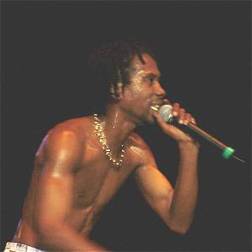
For those of you that have never heard of Bashment Soca, it is one of the most divisive forms of Soca coming out of Barbados, and thus Crop Over; people either hate it or love it, or in some cases hate themselves because they love it.
Bashment Soca, like many other types of Soca, does not have a clearly defined date of creation, because as I have argued, a genre only happens when others start imitating the prototype recording.
In this case, the prototype recording was “Hard Wine” done in 1996 by Lil’ Rick, who at the time was known primarily as a Bajan Dancehall performer and DJ*.
From this recording a number of traits become clear:
As this prototype was copied due to its overwhelming popularity, artists too copied the subject matter (wukking up) and added another one of their pressing issues, drinks. Here is Fraud Squad:
We can once again see the strong use of Bajan dialect and the generally “odd” harmony. Here is another classic Bashment Soca hit, “Boom Tick Tick.” It sings about dancing, wukking up, which Hard Wine did and it is also mixed very raw in comparison with other professionally produced songs.
In summary, most of these Bashment Soca songs are from the early 2000s and it is my view that it is a sub-genre that is quickly disappearing as Bashment Soca artists get more “musical” (see Gorg ). However, for better or worse, it remains one of the clear sub-genres of Soca to come out of Barbados. **
* The input of Eric Lewis and his work with MADD was also important. Lewis employed heavy use of Bajan dialect throughout his compositions see “Tribute to Grynner.”
* * See my Stabby post to come for another example of Bashment Soca in action!!!
As the title shows, this post is intended to diminish the absolute abuse of musical terms which happens every Crop Over.
Unlike some, I am not against non- musicians engaging in musical discussion, I actually quite enjoy the debates.

However, pretending to use musical terms to sound knowledgeable when you don’t have a clue what they mean is not cool.
So here are some definitions of common musical terms so you (I) can have a more enjoyable Crop Over season.
1. Instrumentation is the texture of musical sounds in a performance and here is a list of instruments commonly seen or heard on Crop Over/Carnivals stages:
Here are instruments not heard on Crop Over/Carnivals stages:
2. Rhythm/Time
Rhythm is a common musical term. In its strictest definition it is sound across time. In other words, once sound is played by whatever instrument and time passes (which it will) it displays rhythm. So for example, the bass guitar player plucks a string and whatever pattern or notes he is playing form a rhythm. The other more common use of rhythm refers to the beat and the way that beat is organised. So for example, the calypso beat is referred to as the calypso rhythm and that rhythm is played by the drums. What must be remembered is that each individual instrument has a rhythm which in turn combines to create an overall rhythm (beat).
3. Melody
Melody is the standout sequence of pitches heard in a song. Melodies are the things that you remember in your head and sing in the shower. At Crop Over and all over the world, it is the thing lead singers produce when they sing. In addition, instruments which produce pitch also play melody. So in a calypso tent band for example, in the areas where the singer stops singing, a band chorus happens where the trumpets or saxes take the melody.
4. Harmony
Harmony happens when two or more pitches are played at the same time. This is a very musical concept and musicians spend a lot of formal and informal education dealing with this area which can get very complex. At Crop Over, the keyboard, bass guitar and guitar provide the harmonic bed. In calypso bands that have horn sections, harmony is also provided when the different horns, trumpet sax and trombone, play different notes together.
5. Key/Pitch/Scale
These terms are probably the most misused in Crop Over by non- musicians. The understanding of key, believe it or not is based on harmony and even though many people do not understand harmony, they definitely perceive key. However, perception and being able to explain it are two different things and the following terms heard frequently this time of year, all refer to key in some way (these terms are in Bajan dialect for my international audience).
What people refer to when they make these statements is the relationship between melody and key centre. A key centre is established through harmony or through the melody itself where certain notes create a ‘home base.’ What is also created is a set of notes which ‘should’ be heard. When someone is out of key, it means that they don’t accurately hit the notes which should be heard. What usually makes this worse is when this person sings with musical accompaniment, as these instruments hit the right pitches leaving the singer sounding even more ‘out there.’ This is of course the science behind it and perception of pitch is done quickly by those good enough to hear the home base and accompanying right notes.
So that is it. Feel free, in fact, be compelled to use this information throughout the season and don’t hesitate to shout me back here if you want any further clarification. Also, pass it on to your friends having carnivals this summer, like those in St. lucia and Grenada…this is the only way we can stop the abuse!
We have all been there as Caribbean people. We are in a club and our favourite Soca/Dancehall/Zouk/Calypso/Konpa/Merengue/Timba jam comes on. As we pull our partners or absolute strangers close, or in the case with Tambú, at a respectable distance, we glimpse out of the corner of our eye some obvious non-natives moving. Are they dancing? You ask. They must be since they are not foaming at the mouth. For those unfamiliar with this scenario watch the following clip.
Also for those unfamiliar, here are Caribbean people dancing to Soca.
And finally, for those unfamiliar to the general issue, here is Eddie Murphy from his legendary “Raw” stand up commenting on it.
Unlike Murphy and Chapelle, who also does a seriously funny take on this, I will attempt to apply some sort of meaningful analysis to answer the question why can’t white people dance to Caribbean (black music) music?
The (an) Answer
Dancing and responses to dancing show more than anything how much of a learnt behaviour listening is. For example it is obvious that in both the examples above, both sets of individuals were responding to the sounds they were hearing. However, it is apparent that
From the clip, Murphy suggests that “white people” listen to the lyrics and dance off of those. I however, think that is more than that. Let us look for example at a song that is tremendously popular “Monster Winer” by Kerwin Dubois and Lil Rick. I have used this example for a reason which shall be revealed in a bit.
From the song, there are four distinct rhythms that are played together:
Conceivably, you can dance to any of these rhythms. However, Caribbean people generally perceive the bass kick as the most important one to dance to and keep time with. Why did they choose this? Well because that is what they saw their friends, family, bad influences at school doing from the time they were little ones therefore they do it as they saw it/heard it being done. In other words, they LEARNT which one of the rhythms was the most important as well as HOW to respond to that rhythm.
Of course they can!
So that is why it is said that white people can’t dance because they don’t grow up in the same cultural environment as Blacks and Caribbean people do. This does not mean however that they will never be able to dance like Caribbean people because dancing and listening are learnt behaviours and lack of melanin has nothing to do with it. In fact, there are millions of white people, including many Caribbean whites, whose dancing will not look out of place on any dance floor in the region. To prove it, let’s go to YouTube.
Here is a video from the Siberian dance group doing “Monster Winer.”
http://www.youtube.com/watch?v=EdjVKQoBzVM
It is obvious that someone here spent their time studying and listening to Caribbean music and imitating how Caribbean people respond to it. Whoever they are then transmitted this method of listening to others. I therefore bet that if any similar song to “Monster Winer” plays, these dancers will be able to execute moves like Caribbean persons without their skin colour causing them to “regress” in to hapless shaking.
In summary, white people can dance (there is no one correct way), and can dance LIKE Caribbean people to Caribbean music; all it involves is them listening LIKE and moving LIKE Caribbean people. The videos on YouTube prove this as well as the Bajan Blue Box Cart band every Crop Over*. Dancing has nothing to do with melanin, but instead how people choose to live out the culture of race.* *
* Please Google them.
**There are fantastic academics who deal with this, Stuart Hall and Paul Gilroy for starters.
Hey guys,
I am on Slideshare as well! On this site I put up some of my class work. I also have my PhD oral defense for viewing! The material here is obviously more in depth and is really for other music and culture teachers especially here in the Caribbean. Enjoy and use well!
 stefanwalcott.com