
JOHN BOULAY – CHARLOTVILLE OR MARTIN’S BAY?

This folk song, John Boulay, is one of the more popular folk songs in Barbados.

I learnt it not from my parents or grandparents, but at primary school from my music teacher, Mr Messiah, and the Bible of folk songs from Barbados, The Folk Songs of Barbados by Marshall, McGeary and Thompson.

However, when I searched for a version of the song I did with the female group, The Tenantry. I came across this. John Boulay, sung by Errol James with the Marionette Chorale. Here it is below:

In the description, it is called a Tobago folk song.

I am really not surprised by this, as songs, even in those days without modern mass media, travelled easily. The journey was made even easier, no doubt by the closeness of Barbados and Tobago. What is interesting, though, is that John Boulay, who is from Martin’s Bay in Barbados, is now from Charlotteville. However, his poor character remains the same.

Shame on you, John!

In short, this song shows me how terribly under-researched English-speaking Caribbean folk songs are, and that the Caribbean as an idea extends beyond small national borders, even if it takes the scoundrel John Boulay to show us.

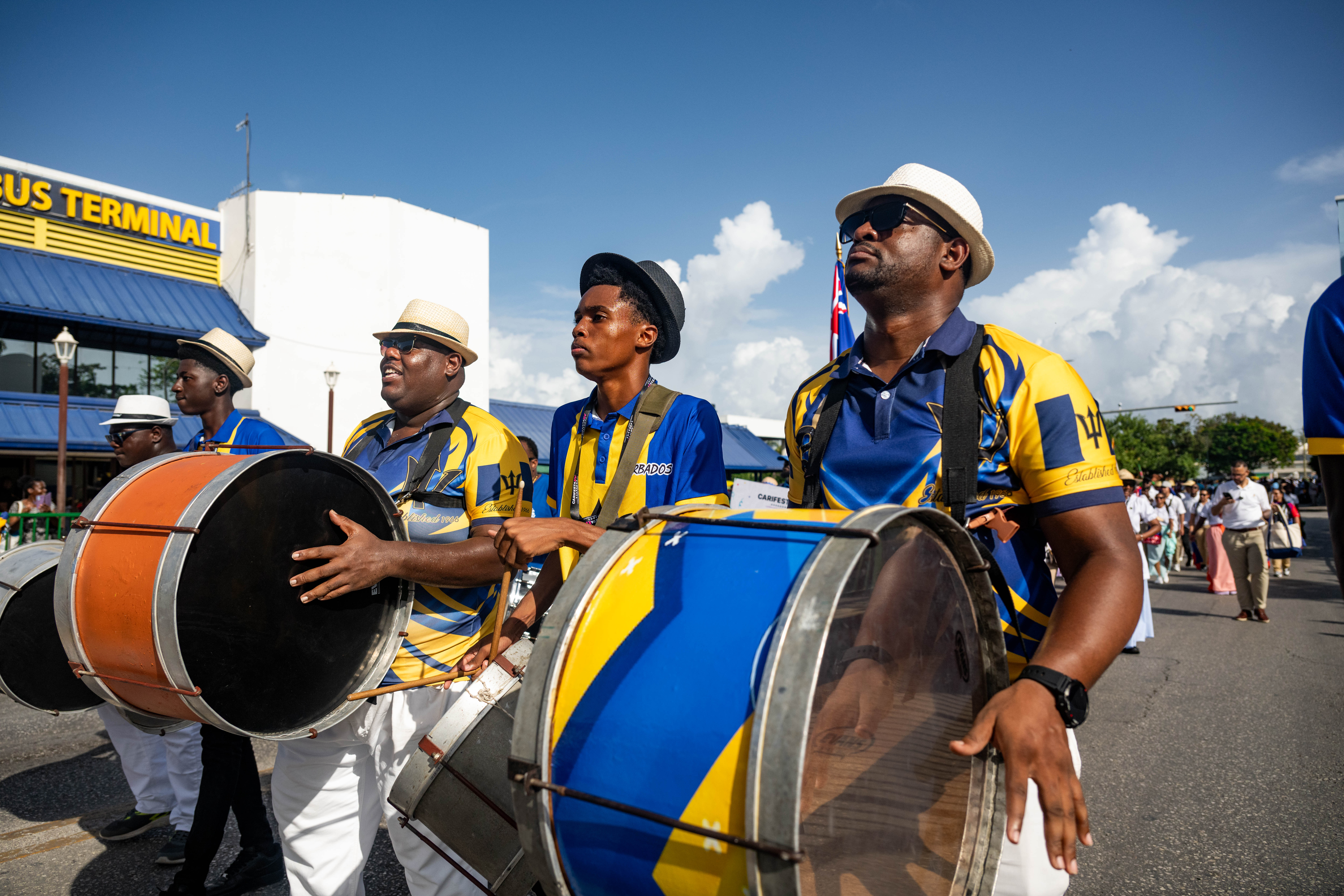
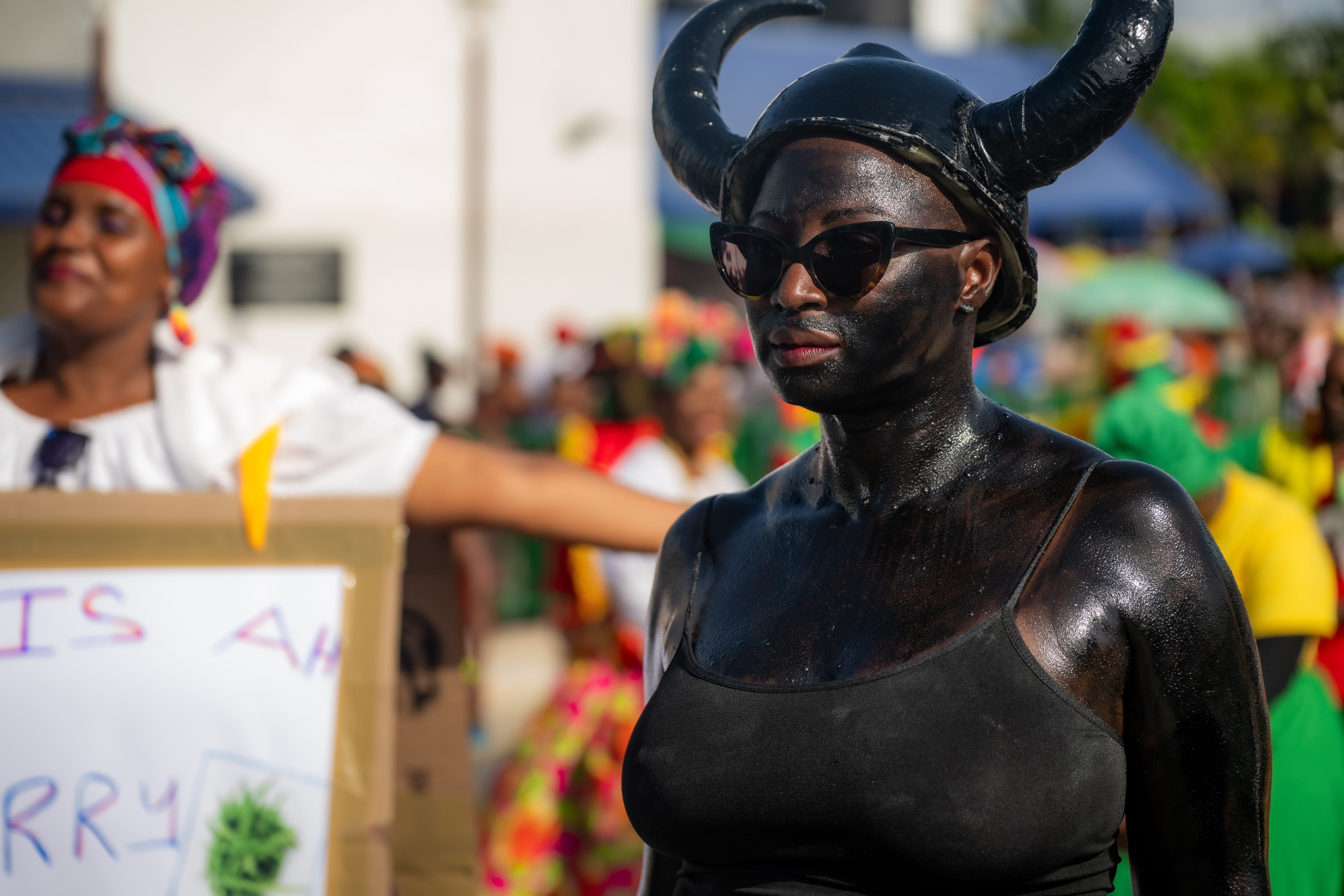
Carifesta XV

Carifesta is in Barbados, returning after 8 years.

As I continue to explore another aspect of art as part of the media team, here are some of my photos from this year’s parade.

If you are in Barbados, COME OUT!

There is a lot going on!

Crop Over 2022

Crop Over is finished for 2022.

Here is my personal highlight:

the Barbados National Youth Steel Orchestra, led by Lowrey Worrell doing my arrangement of an Alison Hinds medley sung by Ambassador Alison Hinds herself.

Here is to a great Crop Over 2023.

SERIES ON CARIBBEAN MUSIC PRODUCTION

In Barbados and the Caribbean, we struggle to tell our stories.


Of late, there has been a real uptick in digital content, which makes me happy.


This series is an example of this where producer Randy Eastmond talks about how some famous Barbadian songs are created.


It’s called Behind the Riddim.


Check out this episode featuring John Roett.

Handel’s Caribbean Messiah in Halle Germany

Look what came through yesterday.

The program to Handel Festpielle in Halle with Handel’s Caribbean Messiah as a featured production for the 2021 run.

I wrote and was executive producer on this work since its inception and what a ride Handel’s Caribbean Messiah has been. Here is a clip of me going through the process of composing for the debut show.

So here are the THANK YOUS!!!!

  1. Thank you Fran Wickham and Ronald Grant, for really believing in that first show at Frank Collymore Hall in 2017.


2. All of the Barbados Museum crew especially Kevin Farmer who brought us over in 2018. BCIDA for supporting the album production in 2018.

3. Jewel Forde and everyone at the Caribbean Broadcasting Corporation for the success of the 2018 run.


4. The Caribbean Export Development Agency National Cultural Foundation for their support in 2019.


5. The original management team who assisted in the growth of the production, the original Bajan cast and our expanded cast in 2019.

This started as an idea on a page and ended up being accepted by Handel Haus, I am truly personally humbled and I have learnt soooo much.


We might not get there as a group but the production shows there is a global demand for what we do in these tiny islands once there is co-operation.


Eventually, I will be writing and blogging on this experience outlining where we can improve as cultural industry people.


But for now.

Thank you Barbados for allowing me to create Handel’s Caribbean Messiah.

Bashment Soca ain’t about Dat!!! – Looking for music in all the wrong (right) places –

There are few sub-genres in Soca at Crop Over that are as divisive as Bashment Soca (both 1st and 2nd comings see my article).

To refresh, Bashment Soca (the I and the II) makes heavy use of Bajan dialect with speech as melody.

Most with traditional musical training usually dismiss it as sonic drivel sighting its harmonic simplicity and melodic monotony.

But are they looking for music in the right places?

Let’s take a look at “Go Stabby” to try and answer that question.

“Go Stabby” is a typical Bashment Soca song.

Here is it below.

To my surprise, “Go Stabby” was popular outside of Barbados despite Stabby being unintelligible to most non-Barbadians. Why may you ask? It is because “Go Stabby” connected on a different musical level to other pop and carnival soca songs; it is was all about the RHYTHM!

Believe it or not “Go Stabby” is quite interesting rhythmically. “Go Stabby” has something called rhythmic tension and release with the “Go Stabby” repeated line, the tension and the “Stabbyyyyy,” the release.

Net result?

INTEREST.

It also helps that these two parts of the song are the ones most clearly understood by non-Bajan speakers.

In short, there is a reason for everything under the sun, and though some might claim the reason for “Go Stabby’s” popularity was because of duped and ignorant audiences, that’s not the case.

One has to look in the right places.

* Side note, I performed this song as part of the backing band at Bacchanal Calypso Tent in 2008. The initial reaction was tremendous, but in performance, Stabby didn’t realise that the verses were not what people wanted to hear, and he chose to perform it like the recording. Of course, the verses fell flat, meaning the live performance was lukewarm at best. Which brings us to a future blog, performance of Soca, stay tuned.

Handel’s Caribbean Messiah #global

I am very proud to announce that Handel’s Caribbean Messiah has been selected for the Handel-Festspiele in Halle Germany for 2021.

The Handel-Festspiele is an annual festival celebrating Handel’s music in his birthplace by local German and international acts.
I am incredibly moved by this selection as we were chosen based on my re-imagining, orchestrations and in some cases compositions, with the performances executed by a 100% Barbadian cast.

The fact that this was done by a panel of Handel experts makes the achievement even more rewarding. Also, the fact that the negotiations began through my completion of the Caribbean Export process, which involved some sacrifice, made me more reassured in my music business decisions.


2019 HCM Messiah Poster


Handel’s Caribbean Messiah is one of the only locally created indigenous works that brings the strands of Caribbean culture together and even though we might not make the last financial hurdle to reach Halle, the fact that it has been looked at as having international quality by unbiased experts shows how we should rely on our own confidence as Caribbean cultural practitioners in what we do.
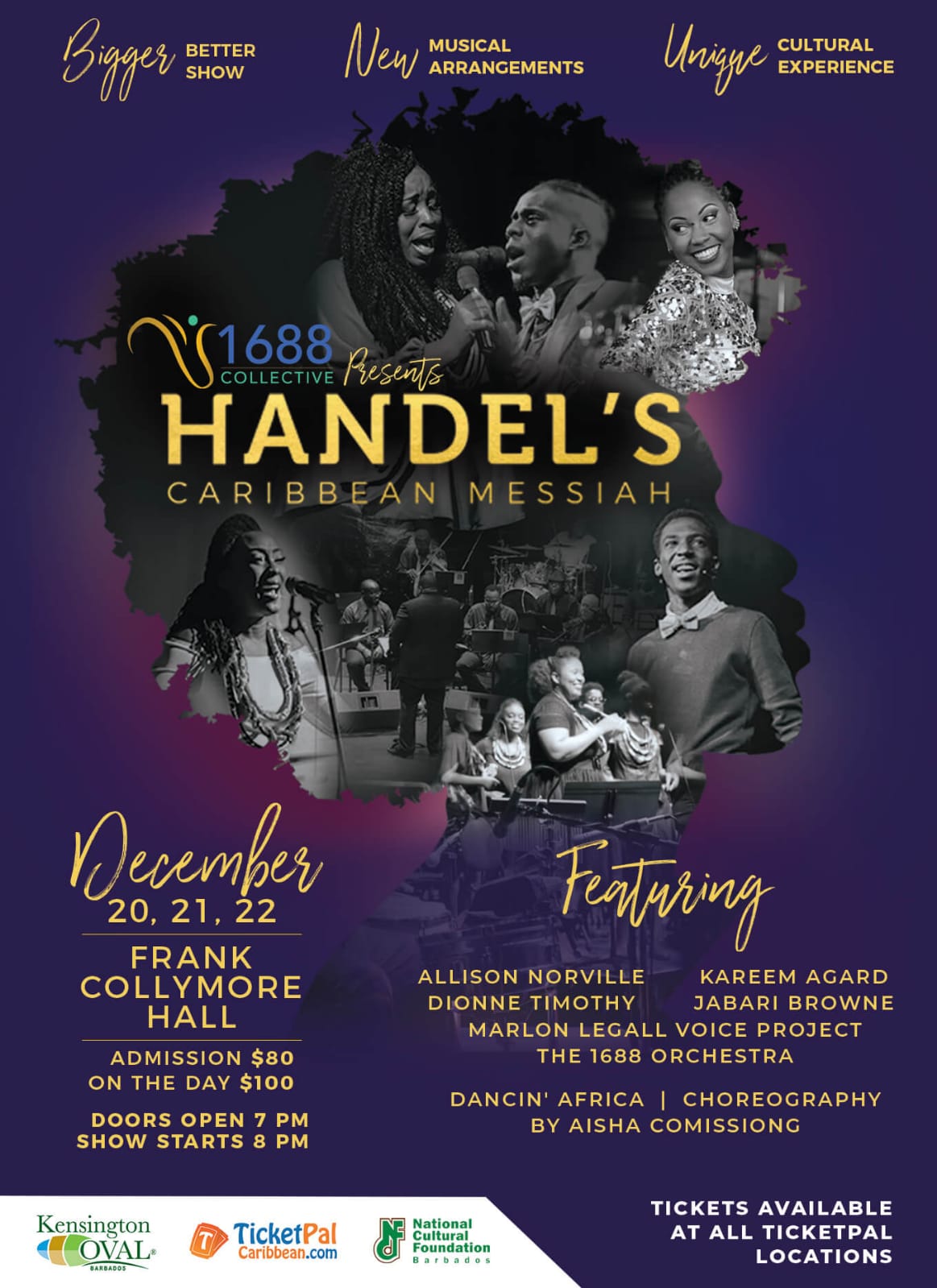
I encourage all who are in Barbados this week, December 20-22nd, to come out to the Frank Collymore Hall and see this production that will soon be leaving these shores by the 100% Bajan ORIGINAL cast.
Thanks to my team who supported the dream and to Fran Wickham and Ronald Grant whose support allowed for the first staging of the production in 2017. Also to Carol Roberts who was enthusiastic about it when it was only an idea and suggested the use of a Bajan nation language narrator who is now Jabari Prince Browne.

Plates…not the ones you eat With

There has been some debate on the use of plates or riddims within Soca.

For those who do not know, plates/riddims are instrumental tracks.

The unique thing with plates/riddims is that unlike other types of popular music, the same instrumental track can be used by multiple artists to create different songs.

The innovators of plates were the producers in downtown Kingston.  One of the most famous uses of these plates/riddims is with the Sleng Teng riddim, a dancehall staple.

As all the songs have the same instrumental backing, as in the Sleng Teng Riddim, Djs generally find them easier to mix (to transition from one song to the next). Kingstonian sound system operators, who were also record producers, realised this early on and they all made the recording of plates a priority within their work.

The penetration of Jamaican music into the rest of the Caribbean as well as the rise of the DJ within Soca made the introduction of the riddim concept inevitable. However, this practice is more frowned upon in Soca than in Jamaica because:

  1. It was not part of the tradition. Calypso and its offshoot Soca always prided itself on the original single recording. From the days of Lion to David Rudder.
  2. The use of plates is seen as the conquest of Jamaican culture, a sensitive topic with the rest of the Caribbean.
  3. Plates mean the DJs have won.

My personal view on riddims is a realistic one; they are here as a result of the modern carnival scene. Will they be around forever? Nothing lasts forever but possibly a while to come as the economy and value for producer buck make them attractive.

Are they any worse than what went before? I never try to judge that way cause the older I get, the better my youth music used to be, but what I can tell you is that

  1. some rhythms I like, others I don’t. And
  2. all songs on the same riddim, I do not like equally.

The last point shows that even within the same instrumental, there is still much divergence. Here are two songs I love on the same riddim.

So until global popularity switches from the DJ, look out for them for a while longer.