
Musicians Listen Differently…End of story…(sort of)

Musicians generally have certain types of ears.

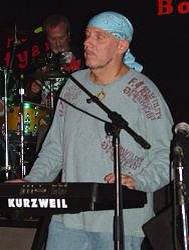
Stefan Walcott taking a listen

It is pretty important to have those ears if you deal with sound all day.

Musicians, no matter the style, have all developed awareness towards the components which make up music – melody, harmony, rhythm and texture.

For example, dance/house/electronica musicians are what I call textual bosses, in that so  much of their work revolves around the ability to make sure the synthesized sounds are performing their assigned function.  Check this link below.

For Dancehall producers on the other hand, it is all about the rhythm. For them the groove needs to be right. See King Jammy below.

I can go on and on and include performing musicians as well because the ability to hear and decode/work out what the hell you are hearing on stage is equally important as in the studio setting.

Musicians therefore feel justified in thinking (by their years of discussion and reproduction of what they are hearing) that everyone should hear like them. After all, what is music education other than – this is music – listen to it this way. However, given the general lack of traditional music education in many places, musicians find themselves frustrated when people do not hear music the same way they do. Watch the following link which has done the pandemic viral rounds on the Web.

If you did not hear those four chords no problem. It just means that you listened to those songs completely differently to how I did.  However, Classical musicians, in whose company I do not include myself, must be saying, can’t they hear that?? Those are the same chords over and over damn it!  While jazz musicians (not the pop-smooth ones) are saying that second chord could have been a lot more tasty with some harmonic tension. In short, they are all listening to it with musician’s ears recognizing what they think is musically important and what is musically lacking.  But are they in fact justified? Should their (our) listening practices be more respected, appreciated or ‘righter’ than those of the ‘Average Listener’?

These are not easy questions to answer. What I do believe is that everyone has a musical opinion and what musicians do is provide different perspectives on that particular experience. I do not however subscribe to the idea that the musician’s way of listening should be the ONLY way a song should be listened to. Take this example from Gyptian.

When this song was released in 2006 it was extremely popular. However, musicians would identify some glaring mistakes in the second verse not to mention the horrible tuning of the instruments. But should this take away from the pleasure of the so-called ’Average Listener’ ? In my view, it should not and there are other factors like Gyptian’s approach and singing style that still make this a TUNE!!!

To end, the listening experience and who is ’right’ within it is not a topic with easy answers. To me this is the difference between the arts and sciences, all interpretations are valid one, even if musicians think otherwise. So don’t be ashamed when a musician gives you strange looks, we just listen differently! Just look here at  Harry Connick  Jnr. who is dumbfounded at the aural ignorance of Jennifer Lopez.

*There are several good discussions on this by Tagg and Middleton. Check them out.

Singing – Am I Really that Bad?

Singing, as most of my friends and family will say, is not a strong suit of mine.

Singing was also not an activity I was particularly interested in either.

However, as this blog generally poses questions to accepted norms, it is only fitting that I ask, am I really that bad a singer?

Actually, I think I am not a good singer but definitely not a bad one. Here is why.

To start us off here is a clip of me singing.


It is obvious that I am not a technically gifted and by that I mean I don’t have the natural ability where my voice apparatus, vocal muscles etc, creates sound that matches pitches. Of course this was no big deal before the modern recording age. In fact, many communities before modernity were communal and their music activity was centred around participation, think Amazonian or West African village life, so no matter your voice, you sang!

What modernity did though was create the professional singer. And the recording of the professional singer gave value to a certain kind of singing which in some ways eroded how people considered singers globally, this ultimately made singers like me…


BECOME BAD!


Listen to the following clips, first up is Wendy Moten then Beyonce.


http://www.youtube.com/watch?v=QCcHZ2_p7MA


These songs are damn fricking hard to sing.They also have a certain history and tradition behind them that many people globally were not a part of. So for example, if a Tuvan tried to sing these, he might not succeed, even though he might be an excellent throat singer.

In other words, Wendy Moten and Beyonce are not only PROFESSIONALl singers, they are also showing a CERTAIN TYPE of good singing based on the values of their music culture. It does not make the Tuvan a bad singer. If you are unsure what Tuvan throat singing is let us reverse this now and take a listen to some Tuvan throat singing.

Here is a clip from American Idol where this guy was dismissed.

https://www.youtube.com/watch?v=wU4Dd9OCH3s


The judges and audience thought he was crap but was he? They were just using the value system from their music culture which was totally inappropriate to judge Tuvan throat singing. If I used the Tuvan method, Beyonce and Wendy Moten were rubbish because they only produced one pitch, in fact where was the drone Queen Bee!!!???

In short, there are no universal values when it comes to singing. Singing is dependent like all value systems on who makes the rules. So if I someone calls you a bad singer, just ask them if they understand the discourse of power at work in aesthetics. If the look at you blankly, continue singing just like I will now…


* This post does not condone karaoke. Any suggestion that it does is just a coincidence. 🙂

Christmas Music in the Caribbean in 5 Genres

Christmas is an important event in the Caribbean.

Here are five musical genres that are/were rooted/routed to this time of year.

1. Tuk – Barbados

Tuk music is a fife and drum music. It is perhaps the only indigenous Afro-Barbadian genre to have survived colonialisation. At Christmas, Tuk groups would come through villages playing and drinking rum. Tuk music is hardly ever played at this time anymore and has moved into the realm of nationalist celebration.


2. Masquerade – Guyana

Masquerade is another fife and drum music with a strong musical similarity to Tuk.  Like Tuk, the playing of it at Christmas has waned.

http://www.youtube.com/watch?v=-yOT0b53KaE


3. Plena – Puerto Rico

Plena is the one of the major indigenous Puerto Rican musical forms. The music is seen to have been created by English-speaking Caribbean migrants in the 1800s. It is also one of my personal favourites when it comes to Caribbean genres.


4. Parang – Trinidad and Tobago

Trinidad is one of the more cosmopolitan islands in the Caribbean. Parang shows the Hispanic cultural influence as it was traditionally sung in Spanish and uses instruments found in other folk cultures of the Hispanic Caribbean. There is a Soca-Parang variant that is popular but here it is in its traditional form.


5. Parranda – Venezuela

To end, here is a popular genre from Venezuela. Parranda sounds like a more rhythmically complicated version of parang and I am sure they come from the same root. Here is one of my favourite groups, Maracaibo 15.

http://www.youtube.com/watch?v=A4FjVA3MUvs


So I hope you have enjoyed this brief Christmas blog.

All that I am left to do is wish you a

Merry Christmas!

Please enjoy it wherever you are.

Caribbean Music Man


10 Things You Probably Did/n’t Know About Wuk/ing Up – Wuk Up and Wukking Up

To join in with the overt nationalism this time of year in Barbados, here is a blog feature on what I consider the national dance,

the Wuk-Up.

1. Wuk-Up is a dance from Barbados with roots in Africa.

Wuk-Up  is said to have come to Barbados via Sub-saharan African where isolation of the limbs and movement of the hips are part of the dance tradition. Here is a traditional one from Africa and then a Wuk-Up video.


2. Only Bajans are said to Wuk-Up.

In Trinidad they wine, Barbados however is the Wuk-Up capital of the world.  The difference comes from the hip movement, see if you can spot the difference between a wine and a wuk-up.


http://www.youtube.com/watch?v=YRt84z5jDXs


3. Wuk-Up has evolved.

Like all things of nature, Wuk-Up too is Darwinian and as the music has evolved, so too has the Wuk-Up.  I believe, and you are hearing it here first, that there are 3 distinct periods * of Wuk-Up. These changes remember correspond to musical change.

1. Pre-Independence

2. Post Independence 1966-1994

3. 1995-present


4. Contemporary Wuk-Up varies.

While there is a general post-90s style Wuk-Up, it does vary between sub-genres. Bajan Dub/dancehall requires a different wuk than fast soca. So in the former you find jucks, stabs, bend-overs etc. and while these exist in latter, the difference in tempo means Wuk-Up variations are found.


5. Wuk-\Up music is in duple time.

The Wuk-Up occurs in a duple-metre environment. No one Wuk-Ups to 3/4 waltzes, or 7/4 experimental Soca pieces. The hips sub-divide the main pulse, either in half (Bajan dub, Soca <120 beats per minute),  or in quarters (Bajan dub, Soca <120 beats per minute) or with the pulse (soca>135 b.p.m).


6.  Men and women Wuk-Up

Wuk-Up in Barbados is not gender specific. It was not always this way but in the mid 1990s the Grass-Skirt possee popularised male wuking up making it even more socially acceptable.


7. The Wuk-Up has 3 variants.

These are:

  • female on female
  • female on male – most common
  • solo

Male on male wuking up is hardly ever seen in public spaces. This is because Barbados continues to be conservative when it comes to public displays of male homosexuality.

8. People touch when wuking up

As said,  wuking up can be done in pairs between males and females.  When this happens the male is behind the female similar to perreo in Reggaeton. Like perreo, there is physical contact thus making the Wuk-up different to other sexualised dances such as rhumba, tambu, bomba etc. where touching does not occur.

Here is Tambu from Curacao where there is no touching.

http://www.youtube.com/watch?v=5KIdzUWZ5JU


See Example 4b for Wuk-Up.


9. The female dictates when the dance is over in the male-female Wuk-Up.

In Barbados a female decides when your Wuk-Up is over. She does not have to tell you this but her gradual moving away means it is done. This is not meant as a “pursue me” courtship practice a la kangaroos; when she leaves it is over.


10.  The average Wuk-Up is between 10-20 seconds.

Unless the couple wuking up is romantically involved, the average Wuk-Up bewteen strangers is 10-20s (per one Wuk-Up round). This research was done totally unscientifically of course but I stand by it. If you are a male be sure to pay attention to this as well as #9 and if you are a female it is better not to linger beyond this time. *

So those are 10 things to note on the Bajan dance. Thanks for dropping by and Happy Independence weekend if you are in Barbados.


* – Check out my Slideshare on Wuk-Up Music.

Also please note the soon to be released work of Cultural Studies dance scholar John Hunte on the dance.

* A number 11 could have been, the church does not like the dance.


In the Classroom with New Soca Writers

At the Barbados Community College I teach Caribbean music. In class, in keeping with my creative-centric approach, which like the Americans I have give a name, creativincism, I try to get the students to write in the styles taught. Given the fact that Soca has become confined to such a limited  range of compositional choices, I provide my students with the necessary ones and see what they come up with. Of course this stuff is graded, how else would they participate?  First up are two groups composing in the style of Destra circa early 2000s. I call this Power Soca (which of course puts me in contradiction with others but I grade the papers right?).

Here is another one. By the way, Lennox seen here is not a Soca/Calypso practitioner by any stretch of the imagination.


In my view, even though the audio and video are quite rough, they manage to at least provide you with a good understanding of the style the students are working with. The same could also be said of the next two videos which are written in the Bashment Soca style.


I have chosen the last two guys, Kevin and David, because they are as far removed from this music in terms of what they do regularly as any two musicians could be. However, given the guidelines and the space, they too managed to create something that is cool.

To end, I think that creativity lies in many humans. It just shows that once given the boundaries within style and a bit of space, what can be accomplished. It also shows that Soca can have new writers, just that the closed nature of the Caribbean media limit this.
Anyway, let me end with Lennox, “your Rum is my Rum, and my Rum…”

Top 10 Books on Caribbean Music for (Academic) Dummies

Firstly, let me say that I, of course, would recommend my book, Caribbean Composers’ Handbook on Amazon.com for all of those interested in the actual music of Caribbean music but outside of that, here are some others. 🙂

1. Cooper, Carolyn.  Noises in the Blood: Orality, Gender, and the “vulgar” Body of Jamaican Popular Culture. Durham: Duke University Press, 1995.

Carolyn Cooper is one of the premier academics on Dancehall culture in Jamaica. This book is seminal in how it seeks to re-examine the common perspectives on Dancehall. Even though she is an academic, the book is generally accessible and Cooper’s points are still valid some near 20 years later.

2.  Bradley, Lloyd.  Bass culture: when reggae was king. London, Viking 2000.

Bradley’s Bass Culture is one of the best overviews on Jamaican Reggae music I have ever read.  Bradley takes the reader from the pre-sound system of the nineteen forties to the emergence of Dancehall. All the major figures are there from the three big sound system operators of the 60s to the early Dancehall pioneers like Yellowman.

3.  Cowley, John. Carnival, Canboulay, and calypso: traditions in the making. Cambridge [England]; New York, NY, Cambridge University Press, 1996.

Cowley presents a well-researched book on carnival. Cowley provides a great volume of historical information on early Carnival. He also gives many 2nd hand references on important events, such as the Carnival riots and early Calypso competitions. A good one for those who have to teach calypso history.

4.  Pérez Fernández, Rolando. A. La binarización de los ritmos ternarios africanos en América Latina. Ciudad de La Habana, Cuba, Casa de las Américas, 1987.

Pérez Fernández’s book is in Spanish. However, this should not put off persons who do not speak the language. Pérez Fernández ideas are fascinating and unlike many other academics, he deals with the musical sounds of Caribbean music. His main idea is that there was a process which changed African music into the folk music of the Americas we know today. The influence of this work is obvious as he is frequently quoted.

5. Guilbault, J. Zouk: world music in the West Indies, Chicago, University of Chicago Press, 1993. 

There are few texts on Zouk in English, Guilbault’s book is one of them. Guilbault details the origins of this music as well as the identity implications it creates as a French Antillean identity emerges through Zouk. Guilbault also interviews the important players within the movement and provides transcriptions. Another plus is the inclusion of a CD which is also fantastic when dealing with music as a subject.

6.  Kenneth M. Bilby and Michael D. Largey. Caribbean currents: Caribbean music from rumba to reggae. Philadelphia, Temple University Press, 1995.

This book seeks to be an overview of Caribbean music in general. It does a decent job within the introduction of describing the conditions which led to the creation of many genres. It also seeks to detail the important regions within the Caribbean giving summaries and identifying important figures. This book is a good entry into the multi-faceted world of Caribbean music.

7.  Rivera, Raquel Z, Wayne Marshall, and Deborah Hernandez Pacini. Reggaeton. Durham: Duke University Press, 2009.

Reggaeton is possibly the youngest popular genre to have a book about it in the Caribbean region. This book is excellent and through the different perspectives of the contributors, we get a wide view on Reggaeton from its sexual to musical implications. If you want to know anything about the genre, seek out this text.

8.  Lesser, Beth.  Rub a dub Style: The Roots of Modern Dancehall, 2012.

This book is the only one that is available online free of cost as a pdf download. Beth Lesser said she did this to avoid the usual accusations leveled at outsiders who write about other cultures. Lesser’s book is good though and she details all the important figures in the genre; from U-Roy to Beanie Man. Pick it up!

9. Rohlehr, Gordon. Calypso and society in pre-independence Trinidad. Port of Spain 1990. 

Rohlehr, like Cooper, was an academic from the University of the West Indies.  Rohlehr is a literary scholar and in this book, he provides thorough analysis and documentation of the literary form of the Calypso. Rohlehr also details important historical events and how they impacted on the Calypso. It is a formidable text in terms of length so be prepared for the long haul.

10.  Mauleon, Rebeca. Salsa Guidebook: for piano and ensemble. S.I. Sher Music 1993.

This is another book which deals with the sounds of the music. Mauleon is fantastic at providing the necessary listening for the genres she is looking at. She also provides direct transcriptions from these songs. As it deals with Salsa, Mauleon also transcribes from the lesser-known Puerto Rican genres of Bomba and Plena.

So there it is. Remember it is only “a” list and there are other fantastic books out there. Leave a comment for other books you would recommend.

Top 10 Caribbean Music Documentaries

StefanWalcott-LogoRedesign-vertical-grayscale


1. Marley

http://www.youtube.com/watch?v=KuIkYtYi4b0

There are several Bob Marley documentaries out there. This one is the newest and unlike the others, seeks to present Marley as a complex character. However, I still recommend watching “Caribbean Nights,” which is one of the oldest, to get even more perspective on this Caribbean musical giant. However, you can’t go wrong with this one.

2. Sons of Benkos

http://www.youtube.com/watch?v=A1nXiXuuwqE

I see the Caribbean as a cultural area and this documentary focusses on a music type, Champeta, that is not from the archipelago. Instead this popular music form is from Colombia and is a fascinating fusion of popular Western and Central African music and Colombian music. Although Champeta has changed, this documentary shows its roots as well as a fascinating examination of the Palenque region, which is seen as the heart of African culture in Colombia.

3. Made In Jamaica

Made In Jamaica is one of my favourite documentaries on Jamaican music. It does not only have the talking heads as in most documentaries but live performances as well. Each performer is backed by one of the premier rhythm sections in the genre, Sly and Robbie and the sound is fabulous. If you are one that likes more than just info and bios, this documentary is definitely one for you.

4. Routes to Rhythm

http://www.youtube.com/watch?v=RAhSV6_Da84

5. This PBS documentary from the 80s is one of the BEST on salsa.  Everyone is in here. Like Made in Jamaica, some killer live performances are also present. Watch all of it if you have any interest in Salsa music and Cuban music in particular, REQUIRED VIEWING!

5. La Musique Antillaise

This Banyan documentary looks at French Antillean music. Zouk is here as well as older traditional forms.  A short and good watch and for non-French speakers like myself, it is in English.

6. Soca Power

http://www.youtube.com/watch?v=LhNJb7DCh0o

Soca Power is good, it could have been better, but it is good. The documentary follows monster soca artists Bunji Garlin, his spouse Fay-Ann, and Machel Montano at Carnival. While not being fly-on-the-wall, it still manages to capture some of the excitement behind Carnival performances. Worth a watch.

7.  Reggae inna Babylon

http://www.youtube.com/watch?v=NaIIXVoj6zw

Reggae inna Babylon examines the music in the Caribbean diaspora as it focusses on the work of reggae artists in the nineteen seventies in the United Kingdom. The usual suspects Aswad and Third World are here, and though the documentary itself is not quite riveting, we get to see them in action at the time of their greatest popularity – for that alone it is worth a watch.

8.  Puerto Rican Bomba : A Search For Our Roots

This documentary, like Reggae inna Babylon, is partially based in the Diaspora, but then again so much of Puerto Rican culture straddles that divide between mainland and diaspora. It makes the Bomba, a traditional folk form its basis and for those interested in the sound of it, we get break downs of the indivudal parts. It is detailed and very enlightening.

9.   Straight Outta Puerto Rico: Reggaeton’s Rough Road to Glory

If you want an overview of Reggaeton, this is a good place to start. Despite the gawdy ads that seem to suggest a much less mentally stimulating offereing, this documentary manages to speak to the movers and shakers and highlight the events which were important to this genre as it emerged.  With plenty of loud music and imagery, this one would keep you watching for sure.

10. Calypso Dreams

http://www.youtube.com/watch?v=s2I0ZnjpAy0


Calypso Dreams is one of my favourites on this list. It has singing heads as opposed to talking heads, and manages to find many of the calypso artists in their natural environment. Due to this, we hear them without the trappings of arrangements and stage mics. They instead have guitar accompaniment most of the time. If that wasn’t enough, a history of calypso is also given. Every one is here, even Roaring Lion – this is a must see for anyone interested in Trinidadian calypso.

Johnroett.com for Crop Over 2014 Music

John Roett is a Barbadian keyboardist par excellence and entrpeneur.

This year he put together a killer soca compilation of Crop Over 2014 music largely in response to the decline in (legal) ways to get Crop Over soca music. When asked for his motives, John said,

“Pirates take more than people have any idea of bro. If the artistes can get more, which is what they deserve. Then they can do better and better each year. It’s a business venture with benefits for everyone and for the industry as well.”

See the link to this wonderful venture below and it really is a best of the best of Crop Over 2014.

https://www.johnroett.com/product-category/music/

IMG_0350-1.JPG

Vybz Kartel: Musical Genius! Dancehall Mi Seh I

Vybz Kartel happens to be one of my favourite Caribbean artists of vybz Kartel

all time.

Some might be shocked by this, but by growing up with the pounding modality of Dancehall, I was brainwashed into appreciating rhythm and a good hook.

What really gets me about Vybz is his creativity.

One must remember that Dancehall artists do not have the same musical vocabulary to rely on as other composers and improvisers in other types of genres. So one does not learn “Dancehall licks,” as in Jazz, where improvisers learn phrases they KNOW will work.

Dancehall is naked (pun intended). A dancehall performer has a ‘riddim’ (a beat with some chords at times) and they create entire songs using just that. The imagination and skills required to do this are therefore quite different than in other types of music (Rap of course being the exception). Some performers are rather good at creating songs from beats, others not so much. Vybz is a BOSS. Here is one of my favourites, “Realest Thing,” which testifies to this.

Of course that is not all; check this, one of his more famous works, “Clarks.”

http://www.youtube.com/watch?v=ORi4xwSwWlM

What I like about Vybz is his:

  • ability to create sections, where melody as well as rhythmic attacks change.
  • thorough understanding of time and rhythm.
  • talent at placing an accent.
  • melodic variations  in order to achieve sections. He does this so the riddim doesn’t get boring.

To end, it is obvious I am using mostly rhythmic criteria to judge Vybz. I feel fully justified in doing this because rhythm is one of the main things Dancehall is about. So it makes no sense judging Vybz Kartel by how many high notes he can sing or how many chords are in his songs.

It is all about the rhythm and Vybz is the drumming master!

* Yes, I just musically analysed Vybz.

** Yes, I did an article on Vybz unrelated to his murder conviction.