

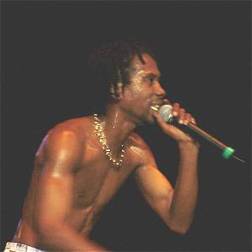
What is Bashment Soca? Crop Over Blog 1

lil rick

For those of you that have never heard of Bashment Soca, it is one of the most divisive forms of Soca coming out of Barbados, and thus Crop Over; people either hate it or love it, or in some cases hate themselves because they love it.

Bashment Soca, like many other types of Soca, does not have a clearly defined date of creation, because as I have argued, a genre only happens when others start imitating the prototype recording.

In this case, the prototype recording was “Hard Wine” done in 1996 by Lil’ Rick, who at the time was known primarily as a Bajan Dancehall performer and DJ*.

From this recording a number of traits become clear:

  • Rick’s prominent use of Bajan dialect.
  • The lack of harmony.

As this prototype was copied due to its overwhelming popularity, artists too copied the subject matter (wukking up) and added another one of their pressing issues, drinks.  Here is Fraud Squad:

We can once again see the strong use of Bajan dialect and the generally “odd” harmony.  Here is another classic Bashment Soca hit, “Boom Tick Tick.”  It sings about dancing, wukking up, which Hard Wine did and it is also mixed very raw in comparison with other professionally produced songs.

In summary, most of these Bashment Soca songs are from the early 2000s and it is my view that it is a sub-genre that is quickly disappearing as Bashment Soca artists get more “musical” (see Gorg ). However, for better or worse, it remains one of the clear sub-genres of Soca to come out of Barbados. **

* The input of Eric Lewis and his work with MADD was also important. Lewis employed heavy use of Bajan dialect throughout his compositions see “Tribute to Grynner.”

* * See my Stabby post to come for another example of Bashment Soca in action!!!

Save Our Musical Language! Stop the abuse of musical terms now!!! Crop Over Blog 2

As the title shows, this post is intended to diminish the absolute abuse of musical terms which happens every Crop Over.

Unlike some, I am not against non- musicians engaging in musical discussion, I actually quite enjoy the debates.

Barbados Crop Over
Barbados Crop Over

However, pretending to use musical terms to sound knowledgeable when you don’t have a clue what they mean is not cool.

So here are some definitions of common musical terms so you (I) can have a more enjoyable Crop Over season.

1. Instrumentation is the texture of musical sounds in a performance and here is a list of instruments commonly seen or heard on Crop Over/Carnivals stages:

  • bass guitar
  • voice
  • guitar
  • keyboards
  • drums
  • mac laptops – which play sequences and background vocals, frequently seen on stage in Soca
  • drum machines – although they are becoming more and more extinct.
  • horn sections – trumpets, trombones, saxes

Here are instruments not heard on Crop Over/Carnivals stages:

  • that thing that you blow
  • aguitarIthinkitis
  • a piano
  • a mother fiddle

2. Rhythm/Time
Rhythm is a common musical term. In its strictest definition it is sound across time. In other words, once sound is played by whatever instrument and time passes (which it will) it displays rhythm. So for example, the bass guitar player plucks a string and whatever pattern or notes he is playing form a rhythm. The other more common use of rhythm refers to the beat and the way that beat is organised. So for example, the calypso beat is referred to as the calypso rhythm and that rhythm is played by the drums.  What must be remembered is that each individual instrument has a rhythm which in turn combines to create an overall rhythm (beat).

3. Melody

Melody is the standout sequence of pitches heard in a song. Melodies are the things that you remember in your head and sing in the shower. At Crop Over and all over the world, it is the thing lead singers produce when they sing. In addition, instruments which produce pitch also play melody. So in a calypso tent band for example, in the areas where the singer stops singing, a band chorus happens where the trumpets or saxes take the melody.

4. Harmony

Harmony happens when two or more pitches are played at the same time. This is a very musical concept and musicians spend a lot of formal and informal education dealing with this area which can get very complex. At Crop Over, the keyboard, bass guitar and guitar provide the harmonic bed. In calypso bands that have horn sections, harmony is also provided when the different horns, trumpet sax and trombone, play different notes together.

5. Key/Pitch/Scale

These terms are probably the most misused in Crop Over by non- musicians. The understanding of key, believe it or not is based on harmony and even though many people do not understand harmony, they definitely perceive key. However, perception and being able to explain it are two different things and the following terms heard frequently this time of year, all refer to key in some way (these terms are in Bajan dialect for my international audience).

  1. He is out of key
  2.  He sound bad.
  3. He out of key with the band.
  4. The band is out of key with she.

What people refer to when they make these statements is the relationship between melody and key centre. A key centre is established through harmony or through the melody itself where certain notes create a ‘home base.’ What is also created is a set of notes which ‘should’ be heard. When someone is out of key, it means that they don’t accurately hit the notes which should be heard. What usually makes this worse is when this person sings with musical accompaniment, as these instruments hit the right pitches leaving the singer sounding even more ‘out there.’ This is of course the science behind it and perception of pitch is done quickly by those good enough to hear the home base and accompanying right notes.

So that is it. Feel free, in fact, be compelled to use this information throughout the season and don’t hesitate to shout me back here if you want any further clarification. Also, pass it on to your friends having carnivals this summer, like those in St. lucia and Grenada…this is the only way we can stop the abuse!


30 Tunes for Soca Dummies 1-10

So here ends the list. If you had gone through all the stages then you should be pretty competent by now. So read and listen through to #1 and be a Soca Dummy never again.

10.   Massage (USVI/St. Kitts)

The Northern Caribbean has not been known as a production centre in terms of Soca especially where I live in the Southern Caribbean. However, a movement with a distinctive Soca sound, no doubt influenced by crunk and loud rap, has been going on for the last few years there. Pumpa’s song “Massage” is the best known of its type and managed to penetrate regionally. With lyrics not for the faint hearted, this song rocked many Carnivals, letting people know that Soca artists in the North Caribbean do indeed exist.

9.  Tempted to Touch (Barbados)

Barbadian artist Rupee is one of the few Caribbean Soca artists to have received a major record label contract. Tempted to Touch was Rupee’s big hit from this period. This song featured on the soundtrack to the movie “After the Sunset” and remains Rupee’s most popular song to this day.

8.   Sugar Bum Bum (Trinidad)

If Endless Vibrations was the watershed, then Sugar Bum Bum was the flood. Despite his large and illustrious body of work, “Sugar Bum Bum” was Kitchener’s most popular work. The bass line alone can cause uncontrollable revelry on over 50 Trinidadians, so play with caution.

7.   Big Truck (Trinidad)

Machel Montano is probably the biggest name in Soca. In the 1990s, his band Xtatik had this hit. This song also uniquely features a reggae section which makes it a fairly different.

6.  Jumbie (Trinidad)

I know this last list might seem as an ode to Machel but how can any Soca list worth its weight not have a heavy presence of one of its biggest Soca stars? Jumbie is a high tempo Soca song with a level of rhythmic intricacy in the melody that few could execute in the genre. This song and its accompanying imagery were well put together and was merely another indicator of Machel’s ability.

5.  Dollar Wine (Trinidad)

Dollar Wine dates back to the end of the Classic Soca Sound and this song and accompanying dance were everywhere. Done by Collin Lucas, it is still a hit with many a hotel band throughout the Caribbean with tourists unable to pay the ‘dollars.’ And you know a song is big when it can set off related songs in other genres like Lil Rick’s Dollar Wine.

4.  Fly – (Trinidad)

Destra is one of the female artists that emerged in the early 2000s along with Fay-Ann Lyons and Patrice Roberts. This song “Fly” shows her breakthrough sound, half-time melodies (borrowed from Euro-American pop music), and generous use of R&B singing.

3.   Band of the Year (Trinidad)

Machel Montano is again on the list this time in a duet with Patrice Roberts. This song, with its half-time melody, was massive, introducing Roberts to a wide audience. It also won Road March in Trinidad and Tobago in 2006.

2.  Tiney Winey  (Jamaica)

Tiny Winey is from Byron Lee and the Dragonaires, an uptown Jamaican band that over the years made a killing from remaking popular carnival hits. This song is one of the few that was actually theirs and was arranged by super producer Leston Paul as well.

1.  Carnival Train (Antigua)

Burning Flames is here again with another Antiguan Special. This song bears the usual imprint of Flames—ripping instrumental breaks, prominent drum machines and great hook combinations. This too, like Workey in list 21-30, managed to cross over in the 1980s to the other Carnivals.

So that is it my friends. You can pick up your qualification by going out and supporting Caribbean Soca artists whenever they are close to you.  I guarantee that you will not be disappointed.

Subscribe to me as well and keep getting perspectives on the wonderful thing that is Caribbean culture!

30 Tunes for Soca Dummies 11-20

20. Pan in A Minor (Trinidad)

Lord Kitchener is one of the foremost composers in Calypso and one of the important composers of the pan Calypso style. Pan in A minor is one of the most famous of these pan songs and features the Classic Soca Sound by super producer Leston Paul. This song is a staple of pan players globally and still rocks a crowd.


19.  Faluma (Barbados/Suriname)

Faluma, by the Barbadian band Square One, was a massive hit in the mid-1990s. It was a remake of a song from Suriname and lead vocalist Alison Hinds, though not a speaker of the language, learnt the song phonetically. The song uses the Soca beat common at that time and is one of the great Wuk-Up songs in Barbados. This track is still a major part of Alison Hinds’ repertoire to this day.


18.  Head Bad (St. Vincent)

Vincentian Soca has not been as dominant as that from Trinidad and Barbados. However, Skinny Fabulous has emerged as a new Soca star and is not only incredibly popular in his homeland, but also in the other Soca locations in the Caribbean. “Head Bad” is testament to that, and its horn intro alone ravages any party.


17.  Dr. Cassandra (Barbados)

Gabby, like Red Plastic Bag looked at earlier, was known as a calypsonian. Gabby however had already had an earlier hit with “Boots,” which came out of his earlier work with Eddy Grant. Dr. Cassandra however was one of the most popular songs on the Eddie Grant constructed Ring Bang rhythm. It features a completely stripped down arrangement with plenty of drums. This still holds Caribbean audiences to this day.


16.   Pressure Boom (St. Lucia)

Ricky T is from St. Lucia, and like Skinny Fabulous has emerged in the last 5 years within Soca. During that time he has become one of the premier Soca stars from St. Lucia. His song “Pressure Boom” from 2009 is largely responsible for this regional recognition.


15.   Chutney Bacchanal (Trinidad)

Chris Garcia has quite harshly been described as one-hit Soca wonder. He was in fact much more than just a singer and appeared on regional television as an actor in a leading Trinidadian soap. His song Chutney Bacchanal was absolutely massive in 1996 and had everyone saying the non-English (non-anything) chorus. It is also a unique beast as it is a Soca song with a story and though not strictly Chutney Soca, it had enough elements of it to have introduced audiences to this sub-genre.


14.  Lotala (Trinidad)

“Lotala is one of the biggest crossover Chutney Soca tracks ever. Sung originally by Sonny Man, the remix, featuring General Grant and Denise Belfon, went on to destroy fetes all throughout the Caribbean. On Lotala, the usual Chutney sounds,such as the harmonium and singing style are present and Sonny Man lends the expected singing style.


13.  Small Pin (St. Vincent)

Before Skinny Fabulous, Beckett was the most popular artist in the Soca/Calypso genre from St. Vincent. This song, “Small Pin,” is his most famous and the chorus still earns some laughter.


12.   Blue (Trinidad)
 

12.   Blue (Trinidad)

I included “Blue” not necessarily for its overwhelming popularity. It is known but there are some not in this list that are more famous. I put “Blue,” by 3 Canal, here because of its unique rhythm and the fact that is a Rapso song, another sub-genre of Soca. Rapso features greater use of speech in melody and it is political. However, this song isn’t and is a J’ouvert song like Tall Pree’s Jab.


11.   Soca Baptist (Trinidad)

This early Soca song from 1980 was before the Classic Soca song took root. Although it was arranged by Pelham Goddard, one of the big three producers of the Classic Soca Sound, it utilised the two and four rhythm on the drum set like the early experiments after Endless Vibrations. This song won the Road March for Blue Boy, later Super Blue and is still a favourite among those from that generation. Then again who could resist that hook?


30 Tunes for Soca Dummies 21-30

Are you a Soca dummy? Can’t tell a wine from a pooch back a jump from a wave? Well here is a list that will help you, 30 Soca songs for dummies. The songs appear in no particular order and are merely numbered to keep you following my blog. So get smart Soca dummy, here we go:

30. Workey Workey (Antigua)

This song from Antiguan super group Burning Flames acknowledges a couple of styles, most notably Zouk, Konpas and Classic Soca. Its form is taken from the first two styles with some (comparatively) long instrumental breaks. The lyrics are suggestive in keeping with the tradition. This track never fails to destroy any Caribbean party and is part of the Soca canon. Speak ill of this tune in the Lesser Antilles and risk expulsion.

29. Differentology  (Trinidad)

Bunji Garlin has been a huge name in Soca since the end of the 90s. This track from 2013 has propelled him into another popular realm. In keeping with the tradition of noticeable popular music borrowing within Soca, there is a healthy presence of (euro) house synths in “Differentology.” It also shows Bunji’s tremendous rhythmic prowess with a verse that is tasty!

28.  Pump Me Up (Barbados)

This mid-nineties song more than any introduced Edwin Yearwood and Krosfyah to the region (important names to the Soca world, go and Google) “Pump Me Up” was at that time a very fresh approach to Carnival music and was responsible in large part for the eventual establishment of Ragga/Groovy Soca as a sub-genre of its own. Edwin’s vocals are unmistakable, and he continued from where David Rudder left off, by placing a R&B singing style into the rhythms of the Anglo-Caribbean.  A must check for anyone interested in what Barbadians term Ragga Soca and the Trinidadians call Groovy Soca.

27.  Turn Me On (St. Vincent)

Kevyn Lyttle’s smash hit is possibly the most popular Ragga Soca/Groovy Soca song ever.  This early noughties number propelled Lyttle to success in 2004 and for a while threatened to open the door to Ragga/Groovy becoming the next ‘big’ thing. That did not materialise however but both the genre and the track live on.

26.  Balance Batty (Dominica)

Bouyon was a style developed by Dominican group WCK. This track is the best representative of the genre and WCK gained tremendous popularity within the region from it. Sung in English, this song still gets the party going with their “Concentration” command. Possibly one of the most important Dominican Soca tunes outside of the influential Exile One group.

25.  Get Something and Wave (Trinidad)

Super Blue/Blue Boy has been one of the most successful Soca artists in Trinidad. This song, “Get Something and Wave,” confirmed his legacy, as it not only won the Road March that year, but started a whole change in partying at Soca fetes, where instead of dancing alone, waving emerged as the thing to do. Described at the time as a fad, this style of partying has been going strong for the last 20 years.

24. Ragga Ragga (Barbados)

This song was not meant to be taken seriously and was in fact a filler on Red Plastic Bag’s 1993 album. However, its impact has been far-reaching with this song being a true watershed recording and being played from Panama to Chicago. It also propelled Red Plastic Bag’s career and put the studio where it was recorded, Chambers studio, run by Nicholas Brancker firmly on the map.

23. Wicked Jab (Grenada)

Wicked Jab comes from Grenadian artist Tallpree and is but one in the long line of Jab songs from Grenada. The Jab Jab is a feature of Jouvert and once again Tallpree pays tribute. Notice the conspicuous conch rhythm which is a characteristic of the Jab songs. Needless to say this one would obliterate any party in the Spice Isle.

22. Endless Vibrations (Trinidad)

For sheer historical significance alone, never mind the killing arrangement, this song would have made the list. However, it remains the breakthrough Soca track which enabled Lord Shorty (Ras Shorty I) to say his (Soca) innovation had arrived. Even though Shorty meant an Indian calypso fusion, this track with prominent guitar and snare drum opened the door for Soul and calypso fusion, on which Soca as a genre became grounded.

21. Hot, Hot, Hot (Montserrat)

“Hot Hot Hot” is possibly the biggest selling Soca track of all time. Arrow, from the satellite Soca region of Montserrat, conservatively put its sales in the millions in the mid-80s and the remake was even bigger causing many a Caribbean cruise ship and hotel band since then to have to play it. For me this track IS the Classic Soca sound and highlights the arranging style of one of the big three producers of the time, Leston Paul. (see Snapshots in Soca)

http://www.youtube.com/watch?v=OkGgdIBX1to

Hit follow so you won’t miss tracks 20-11 for Soca Dummies. I promise thee more big TUNES and an end to Soca ignorance.

Award Show Time! Time for my Fix!

academy grammy

Every February/March the global art and film complex, well really the European /American art and film complex, gears itself up for the award season.

The interest shown in these awards is quite astounding, especially among those whose countries and cultural expressions (film, music, costume design, make-up) are not even remotely represented.

On my Facebook for example, (the measurement of all things cultural of course) people become very touchy when their favourite artist does not take home the miniature man/woman or gramophone.

Being honest, the awards are local affairs with only Britain, (a specific part of Britain let us not fool ourselves) and the US (the two coasts) represented. These two communities then pat themselves on the back for being so great. In fact, the rest of the world looks on, hoping, those involved in the arts that is, that somehow, some way, they too can perhaps be there thanking God and their nursery school teacher.  In reality this is not going to happen and in fact, only a small subset of people from anywhere else get to have their speech cut short by the orchestra. The fact is, this isn’t your party mate/Caribbean person/West African/Aborigine etc. etc.

But we on the outside still care. We care what dress our actress we just paid or pirated to see in Movie Overblown II is wearing. We are concerned about if an actor that looks like us might get an award. Why? Because we are all junkies, junkies addicted to the American dream project. And who can blame us when drugs like this are available. Here is Rihanna accepting her Grammy award in 2008

You heard what she said? She said Barbados?? So come on awards season, help out this struggling addict and give me a surprise as I peep through the window at your party from the non-Western alley, like all good addicts do!