
Here is the second part of the Aural History of Calypso, 1950s to present. Enjoy and subscribe to the YouTube for more music-culture-music, you will not be disappointed.

Here is the second part of the Aural History of Calypso, 1950s to present. Enjoy and subscribe to the YouTube for more music-culture-music, you will not be disappointed.
Red Plastic Bag is seen as one of the foremost lyricists and composers of calypso in Barbados. He has been a significant part of Crop Over and Bajan calypso/soca for over 30 years and to celebrate him is a Stefan Walcott Top 10 list of his lyrical masterpieces.
10. Something’s Happening
This song from 2009 is one of Red Plastic Bag’s biggest hits of the last 5 years. It is simply constructed and I actually dismissed it at first until my mum said, “Listen.” What I heard was a portrayal of Crop Over that was simple, vivid and direct.
My favourite line: I see vendors doing good trade, snowcone man got it made.
9. Can’t Find Me Brother
In the calypso genre it is expected that the lyricist take a topical event and put it over in song. The more disguised yet understood the composition is, the better the calypso is considered. In this song Bag takes the escape in 1987 of convicted criminal Winston Hall to construct this more than witty composition. Note, he never mentions the event directly or Hall by his name. This song is the one most used by people to testify to Bag’s genius.
My favourite line: I search every Kingdom Hall, I search every dancehall.
8. The Country Aint Well
Red Plastic Bag is self-admittedly inspired by Chakdust and like Chalkdust, he uses sickness as a metaphor in this song to get his point across. From the first line to the last puns rain down with most speaking to the topical issues of 1989, which unsurprisingly, are relevant to 2014.
My favourite line(s): The body surviving but really aching bending over in pain. It needs support to stand strong again but cannot depend on this cane.
7. Bim
This one is from 1984, the early days of Red Plastic Bag. Here Bag sings about Bim, another name given to Barbados and his love for it. He does not do this in a typical manner, instead he lists all the things wrong with it and says in spite of these, he still loves his country. Once again a simple melody and easy tempo allows every word to be heard.
My favourite line(s): Some call you bad and cry you down. Certainly not me, of this soil I am a true son.
6. Material
This song, like others on the list, was responsible for Bag winning the national calypso competition. It is one of my favourites and here Bag takes the sobriquet’s of other calypsonians and assigns topical material to them. Composing this song involved some serious writing technique, because not only did he need to find the issues, he had to select the appropriate calypsonian which fitted the issue.
My favourite line: The US show of power as the world’s liberator, that one I giving to Invader.
5. Waste
This song is one that fits the Red Plastic Bag template; find a pun and stick with it. Here Bag plays with his own sobriquet,which to many people is a waste product. However, he pulls this metaphor into the battle calypso tradition laying a challenge to fellow calypsonians that he is back in the game.
My favourite line: To environmentalist it’s really a drag, (why?) it’s hard to get rid of the plastic bag.
4. Pluck It
In 1989 there was what was known as the “chicken controversy” where it was alleged a local businesswoman was selling chickens that were dead as opposed to being freshly killed for consumption. Bag here relates the event through double entendre and a soca beat.
My favourite line: One worker did not chicken out, he broke the news and caused a big foul/fowl up.
3. Bag of Riddles
This one from the early period of Bag (1983) saw him play a game of riddles. Here he takes a controversial political issue and asks, who or what am I? This song of course has a built in audience participation component and it would have been a great joy to have heard it in the old vibrant tent setting.
My favourite line (s): Take this easy riddle to solve you must always get involved. Scratch your head and give it a try, tell me, who or what am I?
2. Volcano
Volcano is a much quicker song than many on this list. This song is once again soca and Bag, unlike many soca artists, inserts his pun. Here he references the eruption of the volcano in Montserrat with his ability to erupt a party. Clever.
Favourite line – Volcano, kicking up, soon erupt and the lava getting hot.
1 Maizie
Although not a Crop Over song, this Christmas song is a funny narrative of Plastic Bag’s partner attempting to pass off her affair as a visit from Santa Clause. Of course this is a rather dry description, just listen to Bag below as he relates it beautifully.
My favourite line: Maizie where is the reindeer, Maizie I ain’t see no sleigh? Look he had no reindeer or sleigh, he came on BWIA.
Hello,
Here is another PowToon looking at how the Carnival music industry machine works this time looking at the role of music competitions.
As Cameroon plays today in the World Cup here is a story from last time around…
World Cup 2010 is remembered for many things: the first World Cup in Africa, the Spanish conquest on a continent which historically had not been that kind to them. It is also remembered for the theme song, “Waka Waka.” Waka Waka” is a fascinating song, and the interest does not come from Shakira’s stomach alone, but from the story of cross circulation it represents. But just in case we forgot, let us remind ourselves of Shakira’s version.
Firstly, “Waka Waka” is not an entirely original song, which is not that surprising given the nature of pop music; what is surprising, however, is where it comes from.
I hope you had enough patience to get to, by my count, the 8th hook and tenth section of this song because that is where Shakira’s song is taken from. Taken from, but not directly, for Shakira’s “Waka Waka,” is actually twice removed from the original. Here is the remake which I assume is the one which really inspired Shakira’s team.
So what is the big deal? Well, this song represents to me the many sides of popular music. For one, there is the global popular, which Shakira is plugged into; this beast consumes everything before it. The other two songs represent the local popular, which has its own audiences and degrees of success but is inevitably outside the huge global pop complex where the Shakiras and Rihannas of this world reside. Shakira’s “Waka Waka” then, sends a reminder to the global pop world that the rest of the world DOES indeed exist, because ultimately they were responsible, (directly so and not through ancestral influence), on the making of Shakira’s version.
Although the Shakira remake might once again seem to be exploitation of the so-called Third World, I cannot help but look at the other side. “Waka Waka” has managed to escape the Western imagination, for when we consider the Cameroon and Colombia depicted here, we see images represented in these videos that are not commonly seen of either country. In the case of Cameroon, some guys having a ball with tied on pillows, and with Colombia, a variety show. There are no jungles, no cocaine or Sylvester Stallone
In short, Shakira’s “Waka Waka,” was more of a World Cup song than people realised and can even be said to embody the made-up notions of equality which sport sometimes alludes to; see pop music is not all that bad.
Waka waka!
Hello,
The video below is part of a series which looks at the Carnival/Crop Over music industry machine. This one speaks about new artists. Enjoy!
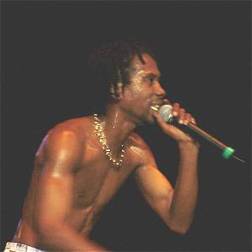
For those of you that have never heard of Bashment Soca, it is one of the most divisive forms of Soca coming out of Barbados, and thus Crop Over; people either hate it or love it, or in some cases hate themselves because they love it.
Bashment Soca, like many other types of Soca, does not have a clearly defined date of creation, because as I have argued, a genre only happens when others start imitating the prototype recording.
In this case, the prototype recording was “Hard Wine” done in 1996 by Lil’ Rick, who at the time was known primarily as a Bajan Dancehall performer and DJ*.
From this recording a number of traits become clear:
As this prototype was copied due to its overwhelming popularity, artists too copied the subject matter (wukking up) and added another one of their pressing issues, drinks. Here is Fraud Squad:
We can once again see the strong use of Bajan dialect and the generally “odd” harmony. Here is another classic Bashment Soca hit, “Boom Tick Tick.” It sings about dancing, wukking up, which Hard Wine did and it is also mixed very raw in comparison with other professionally produced songs.
In summary, most of these Bashment Soca songs are from the early 2000s and it is my view that it is a sub-genre that is quickly disappearing as Bashment Soca artists get more “musical” (see Gorg ). However, for better or worse, it remains one of the clear sub-genres of Soca to come out of Barbados. **
* The input of Eric Lewis and his work with MADD was also important. Lewis employed heavy use of Bajan dialect throughout his compositions see “Tribute to Grynner.”
* * See my Stabby post to come for another example of Bashment Soca in action!!!

There have been a number of notable deaths this year and in Caribbean music none more significant than the recent one of Juan Formell.
As this blog’s readership is made up of mostly English speakers, (the global stats indicate this), many of you may have not heard of Juan Formell before.
Formell was the founder, composer, arranger and leader of the most popular post-revolution music group ever to come from Cuba, Los Van Van. This group, which has been around since the late 1960s is to Cuba what Bob Marley is to Jamaica, Kitchener to Trinidad, Blades to Panama and Red Plastic Bag to Barbados. If you doubt me, take a brief look at minute 20 when they managed to get 270 000 people to a concert in Santiago de Cuba.
In short, Formell was immense. Thanks for the music Juan, a Caribbean music great. Music aLive, now and forever more, Amen!

In Peter Wade’s book, “Music, Race and Nation,” he makes the observation that many of the Caribbean and Latin-American countries have very similar types of “national music.”
I never realized how similar they actually were until I read this, and with the intervention of that great illustrator, YouTube, I was able to see this as well in living html video.
Here they are:
First up is this lesser known Big Drum style from Cariacou.
Also bearing some similarity to this is the Tambú tradition from Curacao.
Not to be left out, here is Bomba from Puerto Rico with none other than Big Bird in attendance.
From the South American continent, here is festejo from Peru.
This list can go on and on, not indefinitely of course as the region is limited, but we can also add merengue tipico from Dominican Republic,gwo ka from Guadeloupe and Rhumba from Cuba. All of them are:
In short, it is ironic how these expressions which are so closely linked to parochial nationalism are less unique than the states which promote them like to say. In fact, there is a strong argument for a Latin American and Caribbean culture over a nationalist one, but alas, difference is far too appealing, but don’t they look similar?
We have all been there as Caribbean people. We are in a club and our favourite Soca/Dancehall/Zouk/Calypso/Konpa/Merengue/Timba jam comes on. As we pull our partners or absolute strangers close, or in the case with Tambú, at a respectable distance, we glimpse out of the corner of our eye some obvious non-natives moving. Are they dancing? You ask. They must be since they are not foaming at the mouth. For those unfamiliar with this scenario watch the following clip.
Also for those unfamiliar, here are Caribbean people dancing to Soca.
And finally, for those unfamiliar to the general issue, here is Eddie Murphy from his legendary “Raw” stand up commenting on it.
Unlike Murphy and Chapelle, who also does a seriously funny take on this, I will attempt to apply some sort of meaningful analysis to answer the question why can’t white people dance to Caribbean (black music) music?
The (an) Answer
Dancing and responses to dancing show more than anything how much of a learnt behaviour listening is. For example it is obvious that in both the examples above, both sets of individuals were responding to the sounds they were hearing. However, it is apparent that
From the clip, Murphy suggests that “white people” listen to the lyrics and dance off of those. I however, think that is more than that. Let us look for example at a song that is tremendously popular “Monster Winer” by Kerwin Dubois and Lil Rick. I have used this example for a reason which shall be revealed in a bit.
From the song, there are four distinct rhythms that are played together:
Conceivably, you can dance to any of these rhythms. However, Caribbean people generally perceive the bass kick as the most important one to dance to and keep time with. Why did they choose this? Well because that is what they saw their friends, family, bad influences at school doing from the time they were little ones therefore they do it as they saw it/heard it being done. In other words, they LEARNT which one of the rhythms was the most important as well as HOW to respond to that rhythm.
Of course they can!
So that is why it is said that white people can’t dance because they don’t grow up in the same cultural environment as Blacks and Caribbean people do. This does not mean however that they will never be able to dance like Caribbean people because dancing and listening are learnt behaviours and lack of melanin has nothing to do with it. In fact, there are millions of white people, including many Caribbean whites, whose dancing will not look out of place on any dance floor in the region. To prove it, let’s go to YouTube.
Here is a video from the Siberian dance group doing “Monster Winer.”
http://www.youtube.com/watch?v=EdjVKQoBzVM
It is obvious that someone here spent their time studying and listening to Caribbean music and imitating how Caribbean people respond to it. Whoever they are then transmitted this method of listening to others. I therefore bet that if any similar song to “Monster Winer” plays, these dancers will be able to execute moves like Caribbean persons without their skin colour causing them to “regress” in to hapless shaking.
In summary, white people can dance (there is no one correct way), and can dance LIKE Caribbean people to Caribbean music; all it involves is them listening LIKE and moving LIKE Caribbean people. The videos on YouTube prove this as well as the Bajan Blue Box Cart band every Crop Over*. Dancing has nothing to do with melanin, but instead how people choose to live out the culture of race.* *
* Please Google them.
**There are fantastic academics who deal with this, Stuart Hall and Paul Gilroy for starters.
Hey guys,
I am on Slideshare as well! On this site I put up some of my class work. I also have my PhD oral defense for viewing! The material here is obviously more in depth and is really for other music and culture teachers especially here in the Caribbean. Enjoy and use well!
 stefanwalcott.com