

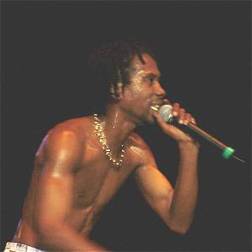
What is Bashment Soca? Crop Over Blog 1

lil rick

For those of you that have never heard of Bashment Soca, it is one of the most divisive forms of Soca coming out of Barbados, and thus Crop Over; people either hate it or love it, or in some cases hate themselves because they love it.

Bashment Soca, like many other types of Soca, does not have a clearly defined date of creation, because as I have argued, a genre only happens when others start imitating the prototype recording.

In this case, the prototype recording was “Hard Wine” done in 1996 by Lil’ Rick, who at the time was known primarily as a Bajan Dancehall performer and DJ*.

From this recording a number of traits become clear:

  • Rick’s prominent use of Bajan dialect.
  • The lack of harmony.

As this prototype was copied due to its overwhelming popularity, artists too copied the subject matter (wukking up) and added another one of their pressing issues, drinks.  Here is Fraud Squad:

We can once again see the strong use of Bajan dialect and the generally “odd” harmony.  Here is another classic Bashment Soca hit, “Boom Tick Tick.”  It sings about dancing, wukking up, which Hard Wine did and it is also mixed very raw in comparison with other professionally produced songs.

In summary, most of these Bashment Soca songs are from the early 2000s and it is my view that it is a sub-genre that is quickly disappearing as Bashment Soca artists get more “musical” (see Gorg ). However, for better or worse, it remains one of the clear sub-genres of Soca to come out of Barbados. **

* The input of Eric Lewis and his work with MADD was also important. Lewis employed heavy use of Bajan dialect throughout his compositions see “Tribute to Grynner.”

* * See my Stabby post to come for another example of Bashment Soca in action!!!

Save Our Musical Language! Stop the abuse of musical terms now!!! Crop Over Blog 2

As the title shows, this post is intended to diminish the absolute abuse of musical terms which happens every Crop Over.

Unlike some, I am not against non- musicians engaging in musical discussion, I actually quite enjoy the debates.

Barbados Crop Over
Barbados Crop Over

However, pretending to use musical terms to sound knowledgeable when you don’t have a clue what they mean is not cool.

So here are some definitions of common musical terms so you (I) can have a more enjoyable Crop Over season.

1. Instrumentation is the texture of musical sounds in a performance and here is a list of instruments commonly seen or heard on Crop Over/Carnivals stages:

  • bass guitar
  • voice
  • guitar
  • keyboards
  • drums
  • mac laptops – which play sequences and background vocals, frequently seen on stage in Soca
  • drum machines – although they are becoming more and more extinct.
  • horn sections – trumpets, trombones, saxes

Here are instruments not heard on Crop Over/Carnivals stages:

  • that thing that you blow
  • aguitarIthinkitis
  • a piano
  • a mother fiddle

2. Rhythm/Time
Rhythm is a common musical term. In its strictest definition it is sound across time. In other words, once sound is played by whatever instrument and time passes (which it will) it displays rhythm. So for example, the bass guitar player plucks a string and whatever pattern or notes he is playing form a rhythm. The other more common use of rhythm refers to the beat and the way that beat is organised. So for example, the calypso beat is referred to as the calypso rhythm and that rhythm is played by the drums.  What must be remembered is that each individual instrument has a rhythm which in turn combines to create an overall rhythm (beat).

3. Melody

Melody is the standout sequence of pitches heard in a song. Melodies are the things that you remember in your head and sing in the shower. At Crop Over and all over the world, it is the thing lead singers produce when they sing. In addition, instruments which produce pitch also play melody. So in a calypso tent band for example, in the areas where the singer stops singing, a band chorus happens where the trumpets or saxes take the melody.

4. Harmony

Harmony happens when two or more pitches are played at the same time. This is a very musical concept and musicians spend a lot of formal and informal education dealing with this area which can get very complex. At Crop Over, the keyboard, bass guitar and guitar provide the harmonic bed. In calypso bands that have horn sections, harmony is also provided when the different horns, trumpet sax and trombone, play different notes together.

5. Key/Pitch/Scale

These terms are probably the most misused in Crop Over by non- musicians. The understanding of key, believe it or not is based on harmony and even though many people do not understand harmony, they definitely perceive key. However, perception and being able to explain it are two different things and the following terms heard frequently this time of year, all refer to key in some way (these terms are in Bajan dialect for my international audience).

  1. He is out of key
  2.  He sound bad.
  3. He out of key with the band.
  4. The band is out of key with she.

What people refer to when they make these statements is the relationship between melody and key centre. A key centre is established through harmony or through the melody itself where certain notes create a ‘home base.’ What is also created is a set of notes which ‘should’ be heard. When someone is out of key, it means that they don’t accurately hit the notes which should be heard. What usually makes this worse is when this person sings with musical accompaniment, as these instruments hit the right pitches leaving the singer sounding even more ‘out there.’ This is of course the science behind it and perception of pitch is done quickly by those good enough to hear the home base and accompanying right notes.

So that is it. Feel free, in fact, be compelled to use this information throughout the season and don’t hesitate to shout me back here if you want any further clarification. Also, pass it on to your friends having carnivals this summer, like those in St. lucia and Grenada…this is the only way we can stop the abuse!


Why Can’t White People Dance? (To Caribbean Music)

We have all been there as Caribbean people. We are in a club and our favourite Soca/Dancehall/Zouk/Calypso/Konpa/Merengue/Timba jam comes on. As we pull our partners or absolute strangers close, or in the case with Tambú, at a respectable distance, we glimpse out of the corner of our eye some obvious non-natives moving. Are they dancing? You ask. They must be since they are not foaming at the mouth.  For those unfamiliar with this scenario watch the following clip.

Also for those unfamiliar, here are Caribbean people dancing to Soca.

And finally, for those unfamiliar to the general issue, here is Eddie Murphy from his legendary “Raw” stand up commenting on it.

Unlike Murphy and Chapelle, who also does a seriously funny take on this, I will attempt to apply some sort of meaningful analysis to answer the question why can’t white people dance to Caribbean (black music) music?

The (an) Answer

Dancing and responses to dancing show more than anything how much of a learnt behaviour listening is. For example it is obvious that in both the examples above, both sets of individuals were responding to the sounds they were hearing. However, it is apparent that

  1. They were not responding the same way to the sounds they were hearing.
  2. They were not choosing the same sounds to respond to.

From the clip, Murphy suggests that “white people” listen to the lyrics and dance off of those. I however, think that is more than that. Let us look for example at a song that is tremendously popular “Monster Winer” by Kerwin Dubois and Lil Rick. I have used this example for a reason which shall be revealed in a bit.

From the song, there are four distinct rhythms that are played together:

  1. The rhythm of the melody as sung by Kerwin.
  2. The rhythm of the horn like synth thingy.
  3. The kick drum (deepest drum sound)
  4. And the snare drum.

Conceivably, you can dance to any of these rhythms. However, Caribbean people generally perceive the bass kick as the most important one to dance to and keep time with. Why did they choose this? Well because that is what they saw their friends, family, bad influences at school doing from the time they were little ones therefore they do it as they saw it/heard it being done. In other words, they LEARNT which one of the rhythms was the most important as well as HOW to respond to that rhythm.

Of course they can!

So that is why it is said that white people can’t dance because they don’t grow up in the same cultural environment as Blacks and Caribbean people do. This does not mean however that they will never be able to dance like Caribbean people because dancing and listening are learnt behaviours and lack of melanin has nothing to do with it.  In fact, there are millions of white people, including many Caribbean whites, whose dancing will not look out of place on any dance floor in the region. To prove it, let’s go to YouTube.

Here is a video from the Siberian dance group doing “Monster Winer.”

http://www.youtube.com/watch?v=EdjVKQoBzVM

It is obvious that someone here spent their time studying and listening to Caribbean music and imitating how Caribbean people respond to it. Whoever they are then transmitted this method of listening to others. I therefore bet that if any similar song to “Monster Winer” plays, these dancers will be able to execute moves like Caribbean persons without their skin colour causing them to “regress” in to hapless shaking.

In summary, white people can dance (there is no one correct way), and can dance LIKE Caribbean people to Caribbean music; all it involves is them listening LIKE and moving LIKE Caribbean people. The videos on YouTube prove this as well as the Bajan Blue Box Cart band every Crop Over*. Dancing has nothing to do with melanin, but instead how people choose to live out the culture of race.* *

* Please Google them.

**There are fantastic academics who deal with this, Stuart Hall and Paul Gilroy for starters.

Music and Culture from Baraguá Cuba

cake cuba and barbados

I posted these videos on my earlier, now deceased, blog.

Here they are together for the first time,

Video from Baraguá, Cuba showing the retention of Anglo-Caribbean culture.

This video was recorded on my visit there in 2012 with the EBCCI, University of the West Indies group. Enjoy! (The cake was baked in Havana however by the Castillos)

Top 10 Bajan Dub (Dancehall) Records for Beginners

Dancehall, which is referred to as Dub in Barbados, took root in Barbados in the early 1980s. The music became the music of the working class and the youth of the time. Eventually, some Barbadian artists produced their own Dancehall records and given the expense of recording at the time, they all did it the low budget way. The important difference with these artists and their Jamaican influences was that they all chose to produce melodic and lyrical content rich in Bajan dialect.  In the last 2 years, there has been a resurgence of the form with a new generation of artists involved with Bajan dub. To help out those new to this, what I hope is an emerging form, I have compiled a Top 10 of the most influential/popular Bajan Dancehall/Dub tunes for beginners.

10. Peter Ram – Quicksand

Peter Ram was a chanter who came out in the late 1980s. He went on to become involved in Ragga Soca and the various Carnival scenes where he gained the majority of his popularity. However, this song from 1988 is how most in Barbados came to know him.

9.  Dub is a Force – Jesse James

As a boy, the reaction to Dub was not favourable. The obvious conservative backlash to its overt sexuality occupied much media space. “Dub is a Force,” with its lack of expletives and sexual references, came as a defence to the music. The video was also memorable as well as the hook, “Dub is the force!”

8. Don’t Ask Me – Crimeson

The re-emergence of Bajan Dub Dancehall owed much to the Dub, a low budget house/community party and YouTube. Young hungry artists went to various communities to perform as well as putting their music on YouTube, skipping the traditional media. Crimeson embodies this perfectly, and his ‘hit, “Don’t Ask Me,” did much to throw the form back into the public spaces again.

7.  Do Sain Fa Mi – Exclusive Soundz a.k.a Fari

http://www.youtube.com/watch?v=gcA_dV5ws3E

Another of the 2nd brigade of Bajan Dub artists is Fari. This song with its partial ode to Kelloggs, actually had no Froot Loops on the shelves of local supermarkets for a bit in Barbados. By the way, his lyrics are really commands to females to perform dances. He is not speaking about motorsports.  

6.   Kid Site – Minibus 

Kid Site was not only a Bajan dub pioneer but a calypso artist of some merit. He later went on to win the National Calypso Monarch competition at Crop Over. His roots, however, are also planted in Bajan Dub and Reggae. His song Minibus, gives a humorous and fairly accurate portrayal of the private transportation taxis which to this day are responsible for the transmission of Dub and Dancehall from Jamaica and Barbados. Here you can hear the obvious Jamaican influence with much of Site’s inflections and phrasing coming straight from Jamaican Dancehall.

5.  Matrix – Meat Gaw Pull

http://www.youtube.com/watch?v=ijaMnYO4EAM

I included this song, “Meat Gaw Pull” because it is what Dancehall is about to me: honesty and humour. Whether you agree with this honesty or not is another story.

4. Rankin Ricky – Driving Skill

Another one here from the old school. This is influenced once again from Jamaica and the at the time ubiquitous “Sleng Teng Riddim.” Ricky, however, maintains more of the Bajan phonology.  The song, like Site’s, speaks to the public transportation in Barbados.

3.  Ninja Man (Barbados) – License to Kill

To complete the public transportation set, here is Ninja Man’s song from the early days of the Bajan Dub. Here we can hear the riddim being similar to the Jamaican Jammy rhythms.

2. Lil Rick – De Yutes

To end, I will give the premier, in my opinion, Bajan Dub lyricists. Lil Rick started firmly in Dancehall and went on to start a strand of Soca, Bashment Soca, through his highly influential, “Hard Wine” composition. Rick, before this, did some of the most popular Bajan dub song ever*.

http://www.youtube.com/watch?v=Hf2jvzQXPAk

1. Lil Rick – Dollar Wine

*Rick o, of course, nt on to do what can be considered Bajan Dub in his biggest song to date “Guh Dung”.

*Special mention must go to Lil Rick’s “Talk for Me” and “ABC” two other hugely popular Bajan Dub songs. They would have been included but in order to give a wider cross section of artists they were excluded from the main list.

10 Caribbean genres you have probably never heard about!

The Caribbean, for a small geographical space, has many different musical cultures.

Most people only know the big boys, the Reggaes, Reggaetons and Merengues but there are numerous other genres that deserve a little blog attention.

Here is a list of 10 I think you should check out.

10.  Masquerade – Guyana


http://www.youtube.com/watch?v=-yOT0b53KaE


There are not many artists or musical genres from Guyana that are known outside of the country. Masquerade is a folk genre similar to Tuk and other fife and drum music types in the Caribbean. Like others, it is heard on festive occasions.

9.   Kaseko – Suriname


Kasesko is a music out of Suriname. Its rhythm is based around the snare and an indigenous drum called the skratji. Leading artists include Carlo Jones and Yakki Famirie.

8. Calypso – Costa Rica


The construction of the Panama canal had a profound effect on the culture of the Caribbean as thousands of men left their agrarian lives to work for the Yankee dollar. Another Central American country touched by this Anglo-Caribbean transfer was Costa Rica, as shown beautifully by Costa Rican calypso.

7. Tambú – Curacao

Tambú is a folk form from the Dutch Caribbean island of Curacao. At one point controversial, it is gone on to be part of Curacao’s cultural heritage, especially for its African descendants.

6. Ra Ra -Haiti/ Ga Ga – Dominican Republic


Ra Ra, as it is known in Haiti, or Ga Ga, as it is known in Dominican Republic, is a street music heard at Easter. It features keyless trumpets as well as bamboo tubes known as vaccines.  Call and response is of course a big part of this form and like other street music types in the Caribbean, it is great fun.


5.  North Caribbean Soca -St. Kitts and US Virgin Islands


In the northern Caribbean countries such as the US Virgin Islands there is a derivative of Soca that I think deserves special mention. It  obviously borrows from the American pop sub genre crunk and therefore its melodies are more shouted than sung. It also sounds “loud” as the mastering engineer probably has all the gains at maximum.

4.  Jonkonnu – Jamaica


While Reggae and the whole Ska complex are widely known, the folk and traditional forms of Jamaica are not nearly as popular. Jonkonnu is one of the oldest musical practices in the Caribbean and is a fife and drum music with relatives in Bahamas, the Carolinas and Barbados.


3.  Bouyon – Dominica

Bouyon is a fusion genre. The group which promoted and performed this, WCK, sought to bring various Caribbean popular elements together. Bouyon really is a sub-genre of Soca but I still think it worthy to put on this list.

2. Gwo ka – Guadeloupe


Gwo ka is a drum ensemble music. It usually does not feature harmonic instruments. It is in the tradition of other large-scale drumming ensembles from the Afro Diaspora such as samba from Brazil and comparsa from Cuba.

1.  Spouge – Barbados


Spouge is a popular form that lived and died in 1970s Barbados. It is played around November in Barbados, the time of national celebrations where things Bajan take centre stage.


So there they are, if you like what you hear, go check out more artists from these genres!

You will not be disappointed.